6-minute read | Last updated March 2026 | Reviewed for accuracy
By King James Adjei | GoldendoodleReport.com
Researcher, Goldendoodle enthusiast, and founder of GoldendoodleReport. Every guide on this site is written to give owners reliable, clearly organised information — researched carefully and updated regularly.
Medical content notice: This guide covers general preparation and what to expect at a first puppy health check. Always follow your veterinarian’s specific guidance — their assessment of your puppy’s individual health status takes precedence over any general information in this article.
The Goldendoodle puppy first vet visit is one of the most important appointments of the entire first year — and one of the most underutilised. Most owners arrive prepared only to receive vaccinations, not realising that this appointment is a comprehensive baseline health check, a deworming consultation, a nutrition discussion, and the start of a relationship with a professional who will guide the puppy’s healthcare for the next 10 to 15 years. This guide covers what to bring, what the vet will check, what questions to ask, and what happens after.
Who This Guide Is For
This article is most useful if you:
- Are bringing a Goldendoodle puppy home and want to prepare for the first vet appointment
- Want to know what to bring so the visit is as useful as possible
- Have not registered with a vet yet and want to understand why doing so before pickup matters
- Want a list of the questions worth asking at this appointment
For the vaccination schedule that begins at this visit, see the Goldendoodle Puppy Vaccination Timeline.
Quick Summary
The Goldendoodle puppy first vet visit should be booked before pickup and happen within 48 hours of bringing the puppy home. Bring all breeder paperwork including vaccination and deworming records, a fresh stool sample in a clean bag, details of the current food, and a written list of questions. The vet will weigh the puppy, examine it from nose to tail, check the breeder’s records, set up the continuing vaccination and deworming schedule, and answer your questions. This is also the right time to discuss neutering timing, parasite prevention products, and pet insurance if not yet in place.
Quick Answer
When should the Goldendoodle puppy first vet visit happen? Within 48 hours of pickup — not at the next convenient opportunity, not at the end of the week. The first 48 hours window exists because this is a health baseline check that can identify congenital conditions or health issues that may affect whether the puppy remains with the new owner or returns to the breeder under a health guarantee. Most reputable breeders specify this in their contract. Register with a local vet before the puppy arrives so the appointment can be booked on pickup day.
The single most valuable thing about the Goldendoodle puppy first vet visit is not the vaccinations — those are part of a sequence and the first one was given by the breeder. The most valuable thing is the conversation. A vet who has examined the puppy, read the breeder’s records, and knows your household circumstances can give specific guidance that no general guide can replace. The questions you bring with you determine how much of that value you extract from the appointment.
This guide covers:
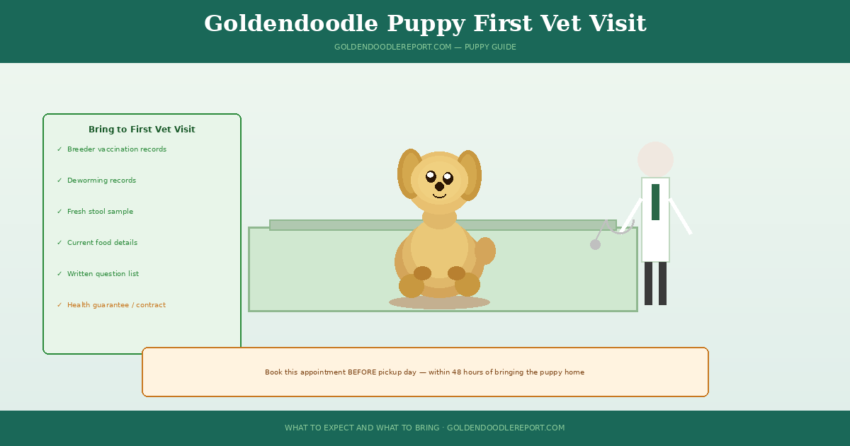
- What to bring to the first vet visit — complete list
- What the vet checks during the examination
- The questions worth asking at this appointment
- What happens after the first visit
- How to make vet visits positive experiences for the puppy
In This Guide
Goldendoodle Puppy First Vet Visit: What to Bring
Arriving prepared makes the appointment significantly more useful — for the vet and for you. For comprehensive guidance on what a first puppy vet visit involves, the AKC’s guide to the first puppy vet visit covers the key elements of what to expect.
What to Bring to the First Vet Visit
| Item | Why It Matters | Priority |
|---|---|---|
| Breeder vaccination records | The vet needs to see exactly which vaccine was given, by which product, and on which date to schedule the continuing series correctly | Essential |
| Breeder deworming records | Confirms which products were used and when, allowing the vet to set the continuing schedule appropriately | Essential |
| Fresh stool sample | Collected on the morning of the appointment, in a clean sealed bag. The vet can run a faecal flotation to check for intestinal parasites | Essential |
| Current food details | Bring the bag or a photo of the nutritional label. The vet can assess whether it meets the puppy’s requirements and confirm appropriate amounts | Essential |
| Written question list | Appointments are short. A written list ensures you cover everything important rather than remembering questions after you leave | Essential |
| Breeder health contract / guarantee | Most reputable breeders require a vet check within 48 hours as a condition of the health guarantee. The vet letter may be required for any claim. | Important |
| Pet insurance details (if taken out) | If you have pet insurance, register the first vet visit as quickly as possible — conditions identified here could be excluded as pre-existing if insurance is taken out after this appointment | Important |
What the Vet Checks — The Full Examination
The first vet examination is a systematic head-to-tail assessment of the puppy’s health status. Understanding what the vet is checking helps owners understand why the examination takes the time it does and what any findings mean.
First Vet Examination — What Is Being Checked
| Area Examined | What the Vet Is Assessing | Why It Matters |
|---|---|---|
| Weight and body condition | Weighed on the scales — this weight is the baseline for all dose calculations. Body condition assessed by palpation. | Underweight puppies may signal parasites, illness, or inadequate feeding |
| Eyes | Clarity, discharge, conjunctiva colour, response to light. Checks for entropion (eyelid rolling in) which can occur in Goldendoodles. | Early eye conditions are more treatable than late-presenting ones |
| Ears | Checks for redness, odour, discharge, mites, or excessive wax. Goldendoodles are at elevated risk of ear infections due to coat growing into the canal. | Sets up ear cleaning guidance for the owner |
| Mouth and teeth | Baby teeth count and position, gum colour and condition, palate formation, bite alignment. | Identifies cleft palate or bite abnormalities early |
| Heart and lungs | Auscultation with stethoscope — listening for heart murmurs, irregular rhythms, abnormal lung sounds. Goldendoodles inherit cardiac sensitivity from Golden Retrievers. | Heart murmurs at 8 weeks may or may not be significant — vet advises on monitoring |
| Abdomen | Palpation for organ size and tenderness, umbilical hernia check, pot-belly assessment (indicator of worm burden). | Small umbilical hernias are common in puppies and many resolve without intervention |
| Limbs and joints | Checks for Luxating patella (kneecap dislocation), limb alignment, joint range of motion, and early signs of hip or elbow conformation issues. | Early identification of orthopedic concerns affects exercise guidance |
| Skin and coat | Parasite check (fleas, ticks, mites), skin condition, coat quality. Goldendoodles can have skin sensitivities. | Sets up parasite prevention product recommendations |
| Genitals and anus | Confirms sex, checks for cryptorchidism in males (undescended testicle), anal sac appearance, and any signs of hernia. | Cryptorchidism requires surgical correction later — early identification matters |
Questions Worth Asking at This Appointment
The first vet visit is time-limited. Arriving with a written list and prioritising the most important questions ensures you leave with the guidance you need most. These are the questions that provide the most practical value at the first appointment.
Questions to Ask at the First Vet Visit
| Question | Why It Matters |
|---|---|
| What does the vaccination schedule look like from here? | Confirms exactly when the next DHPP is due, when rabies is given, and which non-core vaccines are recommended for your location |
| What deworming protocol do you recommend from now? | Sets up the monthly schedule and confirms which product to use at the current weight |
| What flea, tick, and heartworm prevention do you recommend? | Not all products are safe at all puppy ages — vet advises the appropriate product for current weight and age in your geographic area |
| Is the current food appropriate, and how much should I be feeding? | The vet can confirm nutritional adequacy and give weight-specific feeding amounts more accurately than label guidelines |
| When do you recommend neutering/spaying? | Timing matters significantly for Goldendoodles — early neutering is associated with increased joint disease risk. The vet can advise based on your puppy’s size and current evidence. |
| Is there anything in the examination that I should monitor? | Opens the door to any minor findings the vet noted — small umbilical hernias, a faint heart murmur, slight conformational concerns — that merit watching but do not require immediate action |
| What are the signs I should call you about between appointments? | Establishes clear thresholds for when to seek urgent versus routine care — particularly useful for first-time dog owners who may be uncertain about what constitutes an emergency |
What Happens After the First Visit
The first vet visit is the start of a schedule, not a standalone event. Leave with a clear understanding of what comes next.
Vaccination schedule: The vet will tell you exactly when the next DHPP is due — typically at 10 to 12 weeks if the breeder gave the 6 to 8 week vaccine, or immediately if the puppy has not yet had any vaccination. Book the next appointment before leaving the surgery.
Deworming protocol: The vet will prescribe the appropriate dewormer for the puppy’s current weight and recommend timing. Do not use over-the-counter dewormers — dosage accuracy matters and vet-prescribed products are more reliably effective.
Parasite prevention: The vet will recommend a flea, tick, and heartworm prevention product appropriate for the puppy’s age and weight. In most US regions, heartworm prevention is recommended year-round from puppyhood.
Health letter: If required by your breeder’s health guarantee, ask the vet to provide a written health report or letter confirming the examination was completed and the puppy was found healthy (or noting any specific findings). This protects both parties.
Pet insurance: If you have not yet taken out pet insurance, do so before any further veterinary conditions are recorded. After this appointment, conditions identified — even minor ones like a small hernia — may be excluded as pre-existing by some insurers.
Making Vet Visits a Positive Experience
A Goldendoodle that associates the vet clinic with positive experiences is significantly easier to examine, treat, and medicate throughout its life than one that has learned to dread the clinic. The first visit sets the tone — and there are specific things owners can do to ensure it starts well.
Bring high-value treats. Small pieces of cooked chicken or cheese — not dry kibble — and feed them throughout the waiting room period and examination. Ask the veterinary team if they may also give treats during the examination. Most vets are very happy to do this.
Handle the puppy extensively before the visit. Daily handling of paws, ears, mouth, and body from day one means the examination is not the puppy’s first experience of being touched all over. A puppy already comfortable with paw handling will not panic when the vet lifts each leg.
Keep your energy calm. Owners who are anxious about vet visits — particularly if they have had difficult previous experiences with other pets — transmit that anxiety to the puppy. Goldendoodles are highly attuned to owner emotional states. Calm, matter-of-fact behaviour from the owner communicates that the clinic is an unremarkable environment.
Consider non-appointment visits. Many veterinary practices welcome puppy pop-in visits between appointments — simply to come into the waiting room, receive treats from the team, and leave. This builds a positive association with the clinic environment separate from any examination or injection. Ask your vet practice whether they offer this.
⚠️ Watch Out
The most common mistake with the Goldendoodle puppy first vet visit is delaying it. “The puppy seems healthy” is not a reason to wait — the 48-hour check exists precisely because some conditions are not visible to an untrained eye and some are time-sensitive. A puppy with a congenital heart condition that goes undetected because the first vet visit is delayed until week four is not being served well. Book the appointment before pickup. Go within 48 hours regardless of how healthy the puppy appears.
Key Takeaways
- The Goldendoodle puppy first vet visit should happen within 48 hours of pickup — book it before the puppy arrives, not after
- Bring vaccination records, deworming records, a fresh stool sample, current food details, and a written question list
- The examination is a comprehensive head-to-tail health baseline — not just a vaccination appointment
- Key questions to ask: vaccination schedule going forward, deworming protocol, parasite prevention product, feeding amounts, neutering timing, and what to monitor
- Leave with the next appointment booked, a dewormer prescribed, and a parasite prevention product recommended
- Use treats and calm handling throughout the visit to begin building a positive vet association — it pays dividends for the next 15 years
Related Goldendoodle Puppy Guides
- Goldendoodle Puppy Vaccination Timeline — The complete first-year schedule that begins at this appointment
- Goldendoodle Puppy Deworming Guide — The deworming schedule and what your vet will recommend
- First Week With a Goldendoodle Puppy — Day two is the vet visit — what else to do in the first week
- Goldendoodle Puppy Care Guide — Complete first-year overview including all health milestones
- Goldendoodle Puppy Socialization Checklist — Why pop-in vet visits are part of the socialisation checklist
Part of the Goldendoodle Puppy Guide resource hub:
→ Goldendoodle Puppy Guide — Browse all 40 puppy guides
Frequently Asked Questions
Do I really need to take my Goldendoodle puppy to the vet within 48 hours if it seems healthy?
Yes. The 48-hour window exists for three reasons: it fulfils most reputable breeders’ health guarantee requirements (which typically specify this window explicitly), it catches congenital conditions that are not visible without examination, and it establishes a baseline health record from which all future veterinary care can be measured. A puppy that appears healthy can have a heart murmur, undescended testicle, umbilical hernia, or other condition that an experienced vet identifies on examination but that an owner would miss. Go within 48 hours regardless of how healthy the puppy appears.
How do I find a good vet for my Goldendoodle puppy?
Register with a local vet before the puppy arrives — do not leave this until pickup day. Ask other Goldendoodle owners or local dog owners for recommendations. A vet practice with experience of doodle breeds and sporting-breed health profiles is ideal. Look for a practice that welcomes puppy socialisation visits between appointments — this is a good indicator of a team that understands the long-term value of building positive clinic associations from puppyhood.
What if the vet finds something wrong at the first visit?
The vet will explain any findings clearly and advise on what action, if any, is required. Minor findings — a small umbilical hernia, a Grade 1 heart murmur, mild worm burden — are common and most resolve without intervention or are managed simply. If a significant congenital health issue is identified, review your breeder’s health guarantee. Most reputable breeders offer a replacement puppy or refund for congenital conditions identified within the guaranteed window — this is why the first vet visit within 48 hours is specified in the contract.
Should I take out pet insurance before the first vet visit?
Ideally yes — before any conditions are recorded. Pet insurance taken out after the first vet visit may exclude conditions identified at that appointment as pre-existing. In practice, many owners take insurance out on or before pickup day to ensure the period between pickup and the first vet visit is also covered. Compare policies based on what they cover for genetic and breed-predisposed conditions — Goldendoodles are prone to hip dysplasia and cardiac issues, which should be covered by any worthwhile policy.
Can I ask about neutering at the first vet visit even if the puppy is only 8 weeks old?
Yes — and it is worth doing. The neutering timing discussion is increasingly important for Goldendoodles because research has linked early neutering (before 12 months) to increased rates of hip dysplasia, cruciate ligament injury, and certain cancers in this breed. Most vets now recommend waiting longer than was conventional for large-breed dogs. Having this conversation at 8 weeks gives you accurate guidance tailored to your puppy’s size category well before the decision is imminent.
The information in this article is provided for general educational purposes only and does not constitute veterinary advice. King James Adjei is a researcher and enthusiast, not a veterinarian. All health-related decisions for your puppy should be made in consultation with a qualified veterinarian.