Affiliate Disclosure: Some links in this guide are affiliate links. If you purchase through them, we may earn a small commission at no extra cost to you. Read our full affiliate disclaimer here.
By King James Adjei — Researcher and Goldendoodle enthusiast, founder of GoldendoodleReport.com. Every guide on this site is carefully researched and written to give owners reliable, clearly organised information — updated regularly and honest about uncertainty. → About this site
📖 7-minute read | Last updated April 2026 | Reviewed for accuracy
Goldendoodle ear cleaning is one of the most important — and most frequently skipped — regular maintenance tasks for the breed. Goldendoodles inherit the Poodle’s floppy, hair-filled ears, which create the warm, moist, low-airflow environment that bacterial and yeast infections thrive in. Most ear infections in Goldendoodles are preventable with regular cleaning. This guide covers how to clean Goldendoodle ears correctly at home, how often, which products work, the signs that tell you cleaning alone is not enough, and when to contact your vet rather than reaching for the ear cleaner.
👤 Who This Guide Is For
- You want to establish a regular ear cleaning routine for your Goldendoodle
- Your dog has had ear infections and you want to understand how to prevent recurrence
- You are not sure how to clean your Goldendoodle’s ears safely or which products to use
- You want to know the difference between normal ear maintenance and signs that require veterinary attention
⚡ Quick Summary
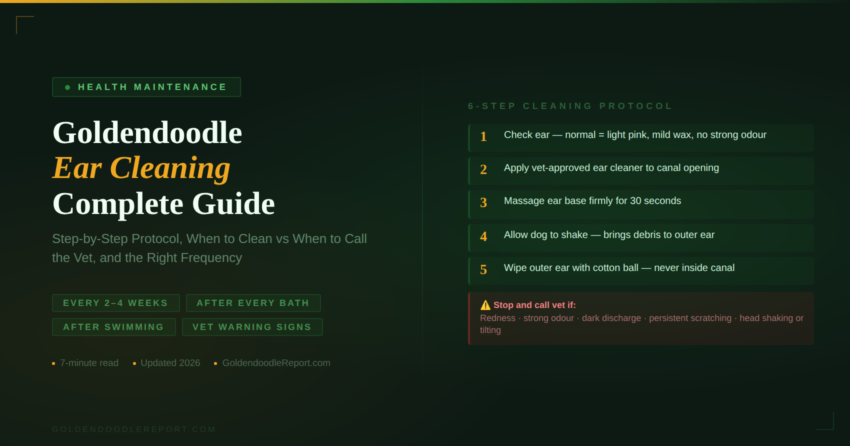
Clean your Goldendoodle’s ears every 2 to 4 weeks as routine maintenance, and after every bath or swim. Use a vet-approved ear cleaner — not water, not cotton swabs inside the canal. Apply cleaner, massage the base of the ear for 30 seconds, allow the dog to shake, then gently wipe visible debris from the outer ear with a cotton ball. Never insert anything into the ear canal. If you see redness, smell a strong odour, notice discharge, or the dog is scratching or shaking their head persistently, stop cleaning and contact your vet.
✅ Quick Answer — Goldendoodle Ear Cleaning Step by Step
- Check the ear — lift the flap and look for redness, swelling, or discharge before cleaning
- If the ear looks normal — apply ear cleaner as directed to the ear canal opening
- Gently massage the base of the ear for 30 seconds — you will hear a squishing sound
- Allow the dog to shake their head — this brings debris up from the canal
- Wipe visible debris from the outer ear with a cotton ball — do not insert into the canal
- Repeat for the other ear
- If you see abnormal signs at step 1 — stop and contact your vet
For the complete grooming overview see Goldendoodle Grooming Guide. For ear infection prevention see 👉 Preventing Ear Infections in Doodles — coming soon.
Why Goldendoodle Ear Cleaning Is One of the Most Important Health Habits
Goldendoodles are among the most ear infection-prone breeds because of their ear anatomy. The floppy ear flap sits directly over the ear canal opening, preventing air circulation and trapping moisture and warmth. This creates a micro-environment inside the ear that is ideal for bacterial and yeast overgrowth — warm, moist, and dark. Without regular cleaning to remove debris and excess moisture, this environment allows infections to develop that are uncomfortable, painful, and require veterinary treatment to resolve.
The additional factor specific to Goldendoodles is ear hair. Many Goldendoodles grow significant amounts of hair inside and around the ear canal — inherited from the Poodle parent. This hair traps additional moisture and debris. Whether to pluck or leave this hair is a debated topic among groomers and veterinarians — some advocate plucking to improve airflow, others argue the process creates micro-trauma that increases infection risk. Discuss with your vet whether plucking is appropriate for your specific dog rather than assuming either approach is universally correct.
Normal Ears vs Ears That Need Veterinary Attention
The most important skill in ear maintenance is knowing the difference between ears that need routine cleaning and ears that need a vet visit. Cleaning an infected ear does not treat the infection — it may provide temporary relief but the infection will worsen without appropriate treatment. Understanding when to clean and when to call the vet prevents the escalation of treatable early infections into severe ones.
What normal Goldendoodle ears look like
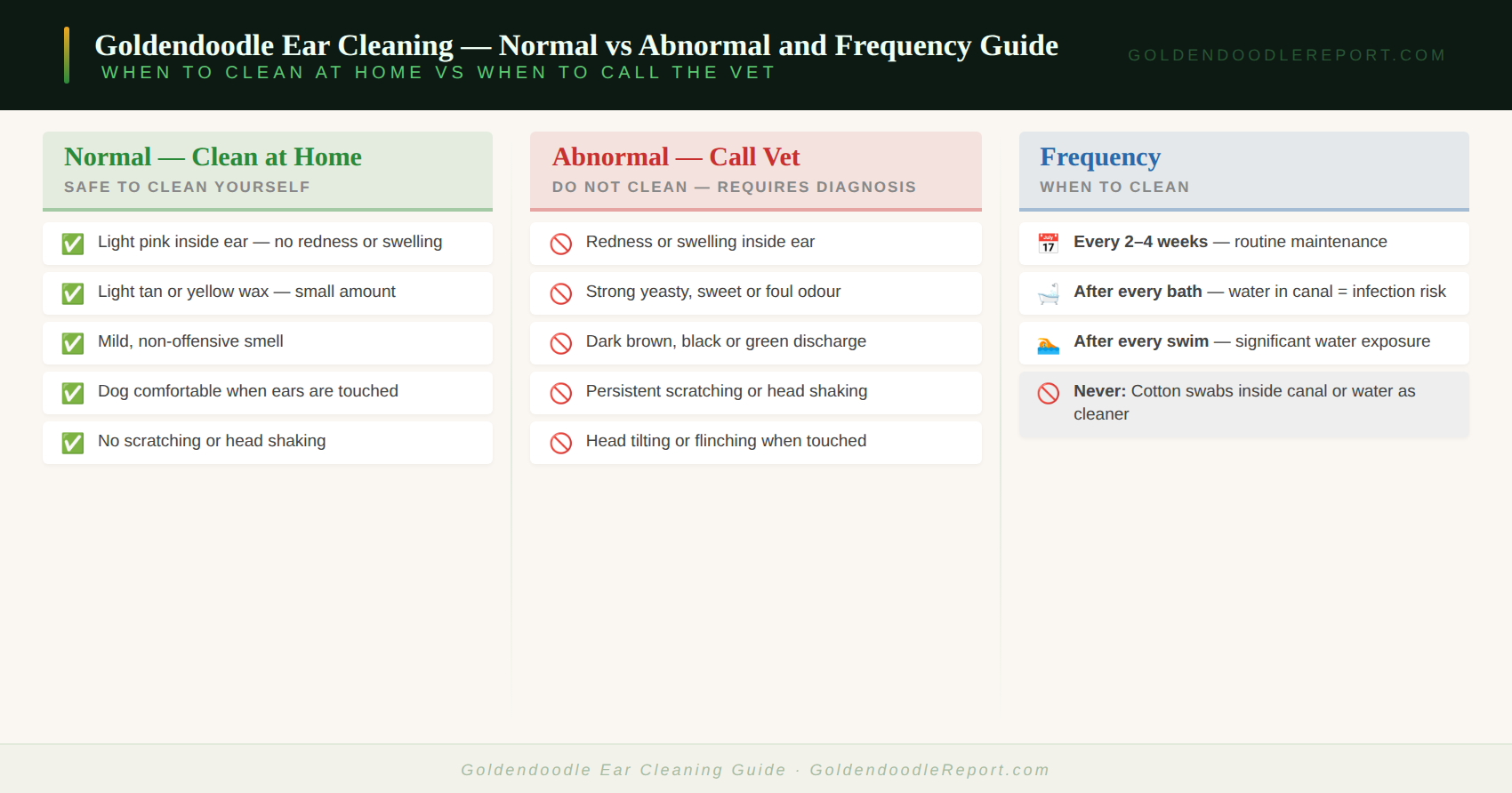
Healthy Goldendoodle ears are light pink inside with a small amount of light tan or light yellow waxy discharge — this is normal ear wax and is part of the ear’s self-cleaning mechanism. There may be a very mild, non-offensive odour. The dog does not scratch at their ears, shake their head persistently, or show discomfort when the ears are touched. These ears are appropriate for routine home cleaning.
What requires veterinary attention
Contact your vet rather than attempting home cleaning if you observe any of the following: redness or swelling inside the ear canal or on the skin of the inner ear flap; a strong, yeasty, sweet, or foul odour; dark brown, black, or green discharge; significant scratching at the ears; persistent head shaking; tilting or holding the head at an angle; the dog flinching or pulling away when the ear area is touched. These signs indicate infection or another condition that requires diagnosis and treatment — home cleaning will not resolve them.
Goldendoodle Ear Cleaning — The Correct Step-by-Step Technique
What you need
A vet-approved ear cleaning solution formulated for dogs. Cotton balls or gauze pads. Do not use cotton swabs — they push debris deeper into the canal rather than removing it and risk damaging the delicate ear canal structures. Do not use water — water does not dissolve ear wax effectively and can leave residual moisture that worsens the infection risk. See 👉 Best Ear Cleaner for Goldendoodles — coming soon for specific product recommendations.
Step 1 — Check before you clean
Before applying any cleaner, lift the ear flap and examine the visible inner ear. Look for the signs described above — redness, discharge, swelling, or unusual odour. If the ear looks normal, proceed. If anything looks abnormal, stop and contact your vet. Never clean an ear you suspect may be infected — cleaning an infected ear causes significant pain and may push infected debris deeper into the canal.
Step 2 — Apply ear cleaner
Hold the ear flap up and away from the head to straighten the ear canal. Apply the ear cleaner to the ear canal opening as directed on the product — typically a generous squeeze that partially fills the visible portion of the canal. Do not insert the applicator tip deeply into the canal.
Step 3 — Massage the ear base
Gently fold the ear flap back down and massage the base of the ear — the area at the bottom of the ear flap where it meets the head — for 30 seconds. You will hear a squishing or squelching sound as the cleaner moves through the horizontal portion of the ear canal, breaking up debris and wax. This massage step is what makes the cleaning effective — simply pouring cleaner in without massaging does very little.
Step 4 — Allow the dog to shake
Step back and allow the dog to shake their head. The shaking dislodges loosened debris and brings it up toward the outer ear where it can be wiped away. Most dogs will shake enthusiastically — the cleaner and debris that comes out during this step is normal and expected.
Step 5 — Wipe the outer ear
Using a cotton ball or gauze, gently wipe the visible outer ear — the area you can see without inserting anything. Remove the loosened wax and debris that has been brought up by the shaking. Do not insert the cotton ball into the ear canal. Clean only what is visible. Repeat with fresh cotton as needed until the outer ear is clean.
Step 6 — Repeat for the other ear
Use fresh cotton for each ear. Never use the same cotton ball on both ears — this risks transferring bacteria or yeast between ears if one has early infection.
Goldendoodle Ear Cleaning Frequency — How Often Is Right
Routine maintenance: every 2 to 4 weeks. Dogs who are prone to ear infections, swim frequently, or have particularly dense ear hair may benefit from cleaning every 2 weeks. Dogs with historically healthy ears and no swimming may be fine with every 4 weeks.
After every bath: always clean the ears after bathing. Water inevitably enters the ear canal during bathing despite the owner’s best efforts to prevent it. Cleaning after every bath removes the moisture before it can contribute to infection development.
After every swim: same principle — swimming introduces significant water into the ears. Dry the outer ear with a towel immediately after swimming and clean with ear cleaner at the earliest opportunity.
For authoritative guidance on dog ear care see the AVMA pet care resources.
🩺 When to Call Your Vet — Not Just Clean
- Strong yeasty, sweet, or foul smell from the ear
- Dark brown, black, or green discharge
- Redness, swelling, or raw-looking skin inside the ear
- Persistent scratching at ears or head shaking
- Head tilting or circling
- Dog flinches, cries, or pulls away when ears are touched
- Visible crusting or scabbing around the ear opening
Ear infections require diagnosis and appropriate medication — antifungal for yeast infections, antibacterial for bacterial infections. Home cleaning does not treat an existing infection.
✅ Your Next Step
Check your Goldendoodle’s ears now — lift both ear flaps and look. If the ears look normal (light pink, mild wax, no strong odour), add ear cleaning to your regular grooming schedule at the 2 to 4 week frequency. If you see any of the abnormal signs listed above, book a vet appointment rather than starting a cleaning routine. For the complete grooming guide see Goldendoodle Grooming Guide.
🔑 Key Takeaways
- Goldendoodles are among the most ear infection-prone breeds because of their floppy, hair-filled ears — regular cleaning is the primary prevention tool
- Always check the ear before cleaning — if you see redness, discharge, strong odour, or the dog shows discomfort, contact your vet rather than cleaning
- The correct technique: apply cleaner, massage the ear base for 30 seconds, allow shaking, wipe visible outer ear with cotton ball — never insert anything into the canal
- Clean every 2 to 4 weeks as routine maintenance, after every bath, and after every swim
- Never use cotton swabs inside the ear canal — they push debris deeper and risk damage
- Home cleaning does not treat an existing infection — if symptoms suggest infection, veterinary diagnosis and treatment are required
📚 Continue Learning
- Goldendoodle Grooming Guide — the complete grooming authority guide
- Goldendoodle Grooming Schedule — where ear cleaning fits in the full routine
- 👉 Goldendoodle Ear Infections and Grooming — coming soon
- 👉 Preventing Ear Infections in Doodles — coming soon
- 👉 Best Ear Cleaner for Goldendoodles — coming soon
↑ Back to: Goldendoodle Grooming Guide | Goldendoodle Grooming — All Articles
Frequently Asked Questions
How often should goldendoodle ear cleaning happen?
Every 2 to 4 weeks as routine maintenance, plus after every bath and after every swim. Dogs prone to ear infections or who swim frequently benefit from the 2-week interval. Dogs with consistently healthy ears may be fine at 4 weeks. The post-bath and post-swim cleaning is non-negotiable regardless of the routine interval — water in the ear canal that is not removed significantly increases infection risk.
How to do goldendoodle ear cleaning at home correctly
First check the ear — if it looks normal, apply vet-approved ear cleaner to the canal opening, massage the ear base firmly for 30 seconds, allow the dog to shake, then wipe visible debris from the outer ear with a cotton ball. Never insert cotton swabs into the canal. Use fresh cotton for each ear. If either ear shows redness, discharge, strong odour, or the dog shows discomfort, stop and contact your vet instead of cleaning.
What should I use to clean my Goldendoodle’s ears?
A vet-approved ear cleaning solution formulated for dogs — not water, not hydrogen peroxide, not vinegar, and not any solution not specifically designed for ear cleaning. Dog ear cleaners are formulated to dissolve wax, dry out moisture, and maintain the appropriate pH for the ear canal environment. See 👉 Best Ear Cleaner for Goldendoodles — coming soon for specific recommendations.
How do I know if my Goldendoodle has an ear infection?
Signs of ear infection include a strong yeasty, sweet, or foul odour; dark brown, black, or green discharge; redness or swelling inside the ear; persistent scratching at the ears or head shaking; head tilting; or the dog pulling away when the ears are touched. If you notice any of these signs, contact your vet rather than attempting home cleaning — ear infections require diagnosis and appropriate medication. Home cleaning does not treat an active infection.
Disclaimer: The information in this article is provided for general educational purposes only. King James Adjei is a researcher and enthusiast, not a veterinarian. For ear health concerns, persistent symptoms, or suspected infections, always consult a qualified veterinarian. Do not attempt home treatment of suspected ear infections.