Affiliate Disclosure: Some links in this guide are affiliate links. If you purchase through them, we may earn a small commission at no extra cost to you. Read our full affiliate disclaimer here.
By King James Adjei — Researcher and Goldendoodle enthusiast, founder of GoldendoodleReport.com. Every guide on this site is carefully researched and written to give owners reliable, clearly organised information — updated regularly and honest about uncertainty. → About this site
📖 7-minute read | Last updated April 2026 | Reviewed for accuracy
Goldendoodle tear stains are one of the most common cosmetic concerns owners notice — the reddish-brown discolouration that develops in the fur below the inner corner of the eyes. For most Goldendoodles, tear staining is a normal variation caused by the chemistry of tears and the structure of the face, not a sign of illness. For some dogs, it does indicate an underlying issue worth investigating. Understanding the difference — and what to do about each cause — is the most useful thing an owner can know about tear stains.
👤 Who This Guide Is For
- You have noticed reddish-brown staining below your Goldendoodle’s eyes and want to understand what causes it
- You want to know whether tear staining indicates a health problem or is normal variation
- You want to know how to clean existing tear stains safely and prevent future staining
- You want to understand which tear stain causes require veterinary attention
⚡ Quick Summary
Goldendoodle tear stains are caused by porphyrins — iron-containing compounds in tears that oxidise and turn reddish-brown when exposed to air and light. Most tear staining is normal and cosmetic — managed by regular cleaning of the eye area and keeping the hair trimmed short enough that it does not hold moisture against the skin. Excessive, sudden, or worsening staining, staining accompanied by discharge or eye irritation, or staining in a dog who previously had no staining may indicate a blocked tear duct, eye infection, or irritant — and warrants a vet check.
✅ Quick Answer — Goldendoodle Tear Stains Management
- Normal staining: Clean daily with a damp cloth or tear stain wipe — keep eye area hair trimmed short
- Excessive staining: Check for irritants (food, water minerals, environmental allergens) and review diet
- New or worsening staining: Vet check — blocked tear duct or eye condition may be responsible
- Staining with discharge, redness, or squinting: Vet check immediately — these are not cosmetic symptoms
- Never use: Hydrogen peroxide, bleach, or any product not formulated for use around dog eyes
For the complete grooming overview see Goldendoodle Grooming Guide. For trimming the eye area see How to Trim a Goldendoodle at Home.
What Causes Goldendoodle Tear Stains
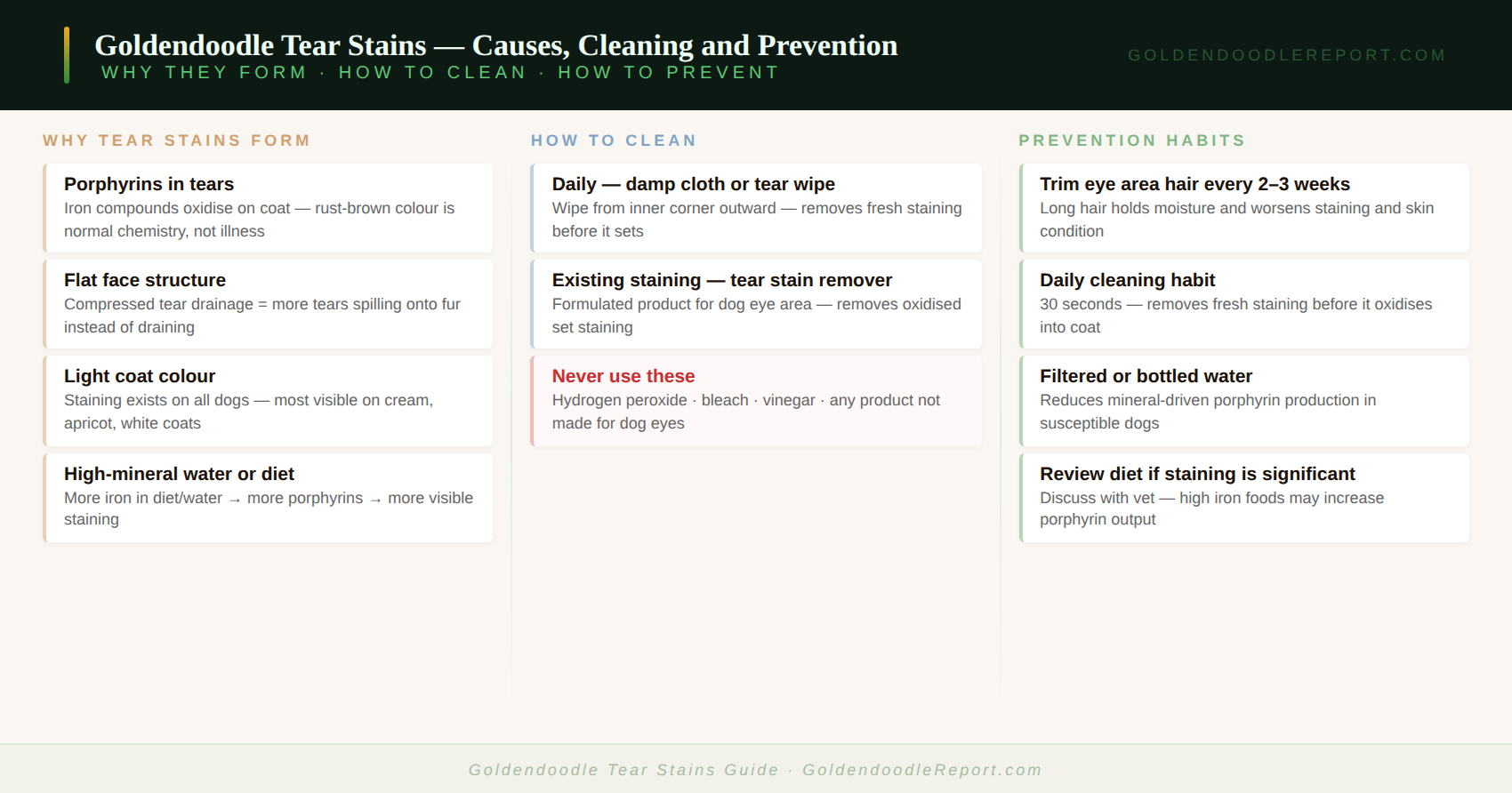
The reddish-brown colour of tear stains is caused by porphyrins — molecules that contain iron and are excreted through tears, saliva, and urine. When porphyrin-containing tears spill onto the fur below the eye, the iron compounds oxidise on contact with air and light, producing the characteristic rust-brown discolouration. This is a normal biochemical process, not a sign of illness, and it happens to varying degrees in all dogs who produce normal tear quantities.
The degree of staining varies significantly between individual dogs based on several factors:
Face structure. Goldendoodles with flatter, rounder faces — more Poodle-like facial structure — tend to have more tear staining because the tear drainage anatomy is compressed, causing more tears to spill over the lower eyelid onto the fur rather than draining through the nasolacrimal (tear) duct. Dogs with longer, narrower muzzles typically have better tear drainage and less staining.
Coat colour and type. Tear staining is most visible on lighter-coloured dogs — cream, apricot, white. On darker coats the same staining exists but is less noticeable. The coat texture also affects staining visibility — wavy coats that hold moisture close to the skin show staining more than shorter, drier coat around the eye area.
Porphyrin production. Some dogs produce more porphyrins than others. This variation is partly genetic and partly influenced by diet — dogs with higher red meat consumption or certain food ingredients may produce more porphyrins. Water with high mineral content has also been associated with increased tear staining in some dogs.
Normal Staining vs Staining That Needs Vet Attention
This distinction is the most important aspect of tear stain management. The majority of Goldendoodle tear staining is normal and requires only cosmetic management. A minority indicates a condition that needs investigation.
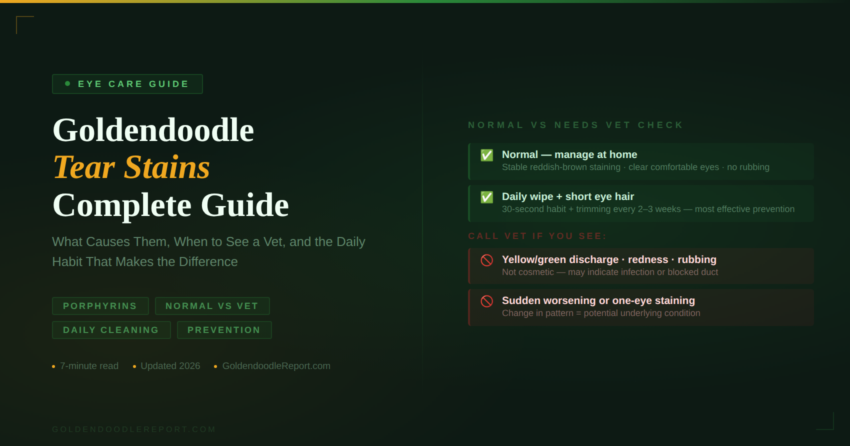
Normal tear staining — manage at home
Consistent, stable reddish-brown staining below the inner corner of both eyes with no other symptoms. The eyes themselves look clear and comfortable. The dog does not rub or paw at their eyes. No discharge beyond the normal minor watery tearing. The staining has been present since puppyhood or early adulthood without change. This is cosmetic staining caused by normal porphyrin excretion and normal tear drainage anatomy — managed at home with regular cleaning.
Staining that warrants a vet check
Contact your vet if you observe any of the following alongside or instead of normal staining: yellow, green, or thick discharge from one or both eyes; excessive watering or tearing that is clearly more than usual; the dog rubbing or pawing at their eyes persistently; redness of the eye itself or the skin around the eye; swelling around the eye area; staining that has suddenly worsened significantly after a period of stability; or staining that is present on only one eye where both eyes previously stained equally. These signs may indicate eye infection, conjunctivitis, blocked tear duct, entropion (eyelid turning inward), or other conditions that require veterinary diagnosis.
How to Clean Goldendoodle Tear Stains
Daily cleaning of the tear stain area prevents the accumulation of dried staining and keeps the skin beneath the fur clean and healthy. Allowing tear staining to accumulate without cleaning creates a moist environment that can lead to skin irritation and secondary infections.
For daily maintenance: Use a damp soft cloth or a purpose-made tear stain wipe to gently clean the area below each eye. Wipe from the inner corner of the eye outward — the direction tears naturally flow. Remove visible staining and dried discharge. Dry the area gently after cleaning — leaving the skin moist under the fur encourages bacterial and yeast growth.
For established staining: Existing reddish-brown staining in the fur does not wash out with water — it is oxidised and bound to the coat fibres. Purpose-made tear stain removers formulated for use around dog eyes can reduce or remove existing staining from the coat. Apply as directed, work gently into the stained area, and rinse completely. See 👉 Best Wipes for Goldendoodle Tear Stains — coming soon.
Never use: Hydrogen peroxide, bleach, vinegar, or any product not specifically formulated and tested for safe use around dog eyes. The eye area skin is delicate and the proximity to the eye means any product irritant can cause eye injury.
Tear Stain Prevention Habits
Keep the eye area hair trimmed short. Hair that grows over the eye or into the staining zone holds moisture against the skin and worsens staining and skin condition beneath. Trimming the eye area hair every 2 to 3 weeks keeps the area dry and reduces staining accumulation. For the safe technique see How to Trim a Goldendoodle at Home.
Use filtered or bottled water. High mineral content in tap water has been associated with increased porphyrin production and therefore increased tear staining in susceptible dogs. Switching to filtered or bottled water is one of the simplest dietary interventions available for dogs with significant staining.
Review the diet. High iron content in food — particularly red meat-heavy diets — is associated with increased porphyrin production. This does not mean eliminating meat from the diet, but considering whether the specific food could be a contributing factor is worth exploring for dogs with persistent significant staining. Discuss dietary changes with your vet before making significant alterations.
Daily cleaning. Established as a habit, daily cleaning of the eye area with a tear stain wipe or damp cloth removes fresh staining before it oxidises and sets into the coat. A 30-second daily cleaning habit prevents the accumulation that makes tear staining visibly significant.
For authoritative guidance on dog eye health see the AVMA pet care resources.
✅ Your Next Step
Check your Goldendoodle’s eyes now. If the staining is consistent, stable, and the eyes look clear and comfortable — this is normal cosmetic staining. Add a 30-second daily cleaning habit to your grooming routine and keep the eye area hair trimmed short. If you see any of the vet-check signs above, book an appointment rather than starting a cleaning routine. For the complete grooming guide see Goldendoodle Grooming Guide.
🔑 Key Takeaways
- Goldendoodle tear stains are caused by porphyrins — iron compounds in tears that oxidise and turn reddish-brown on contact with air and light
- Most tear staining is normal and cosmetic — it does not indicate illness and does not require veterinary attention
- Staining accompanied by discharge, redness, eye rubbing, or sudden worsening does require a vet check — these are not cosmetic symptoms
- Daily cleaning with a damp cloth or tear stain wipe prevents accumulation — it is a 30-second habit that makes the most visible difference
- Keep the eye area hair trimmed short — long hair holds moisture and worsens both the staining and the skin condition beneath
- Never use hydrogen peroxide, bleach, or any product not specifically formulated for safe use around dog eyes
📚 Continue Learning
- Goldendoodle Grooming Guide — complete grooming authority guide
- How to Trim a Goldendoodle at Home — safe eye area trimming technique
- Goldendoodle Grooming Schedule — daily eye cleaning in the routine
- 👉 Goldendoodle Eye Discharge Causes — coming soon
- 👉 How to Clean Goldendoodle Eyes Safely — coming soon
- 👉 How to Trim Hair Around Goldendoodle Eyes — coming soon
- 👉 Best Wipes for Goldendoodle Tear Stains — coming soon
↑ Back to: Goldendoodle Grooming Guide | Goldendoodle Grooming — All Articles
Frequently Asked Questions
Why does my Goldendoodle have tear stains?
Goldendoodle tear stains are caused by porphyrins — iron-containing molecules that are excreted through tears and oxidise to a reddish-brown colour when exposed to air. Most staining is a normal variation related to face structure (flatter faces have less efficient tear drainage), coat colour (lighter coats show staining more clearly), and individual porphyrin production levels. It is not typically a sign of illness unless accompanied by other symptoms such as discharge, redness, or eye rubbing.
How do I get rid of tear stains on my Goldendoodle?
For prevention: clean the eye area daily with a damp cloth or tear stain wipe to remove fresh staining before it oxidises and sets. Keep the eye area hair trimmed short to prevent moisture accumulation. Consider filtered water if your tap water has high mineral content. For existing oxidised staining in the fur: use a purpose-made tear stain remover formulated for use around dog eyes, applied as directed. Never use hydrogen peroxide, bleach, or any product not specifically designed for dog eye area use.
Are tear stains on a Goldendoodle a health concern?
Usually no — consistent, stable staining with no other symptoms is a normal cosmetic variation. However, staining accompanied by yellow or green discharge, redness, the dog rubbing at their eyes, significant sudden worsening, or staining on only one eye warrants a vet check. These signs may indicate an eye infection, blocked tear duct, entropion, or other condition that requires veterinary diagnosis and treatment rather than cosmetic management.
What is the best product for Goldendoodle tear stains?
Purpose-made dog tear stain wipes or tear stain removers formulated for safe use around dog eyes are the correct choice for daily cleaning and existing stain removal. Avoid any product containing hydrogen peroxide, bleach, or other harsh chemicals — the skin around the eye is delicate and proximity to the eye makes any irritant a genuine injury risk. See 👉 Best Wipes for Goldendoodle Tear Stains — coming soon for specific product recommendations.
Disclaimer: The information in this article is provided for general educational purposes only. King James Adjei is a researcher and enthusiast, not a veterinarian. For any eye symptoms beyond normal cosmetic staining, always consult a qualified veterinarian before attempting home treatment.