Affiliate Disclosure: Some links in this guide are affiliate links. If you purchase through them, we may earn a small commission at no extra cost to you. Read our full affiliate disclaimer here.
By King James Adjei — Researcher and Goldendoodle enthusiast, founder of GoldendoodleReport.com. Every guide on this site is carefully researched and written to give owners reliable, clearly organised information — updated regularly and honest about uncertainty. → About this site
📖 8-minute read | Last updated April 2026 | Reviewed for accuracy
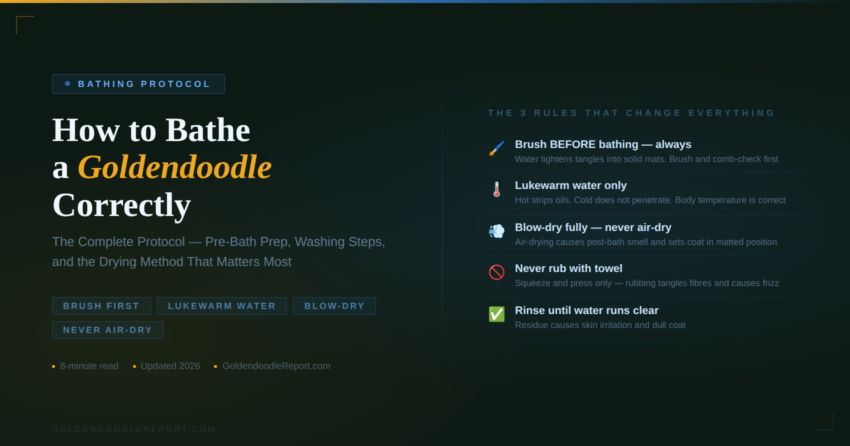
Knowing how to bathe a Goldendoodle correctly makes the difference between a coat that comes out clean, manageable, and soft — and one that comes out frizzy, matted, or developing an odd smell within days. Most bathing problems in Goldendoodles are caused by three mistakes: bathing a coat that has not been brushed first, using the wrong shampoo, and failing to dry the coat completely. This guide covers the correct bathing protocol from start to finish — the pre-bath preparation that most owners skip, the bathing steps in the right order, and the drying method that determines how the coat behaves for the next three to four weeks.
👤 Who This Guide Is For
- You want to bathe your Goldendoodle at home and need the correct protocol from start to finish
- Your dog’s coat comes out frizzy or harder to manage after bathing and you want to know why
- Your dog smells again within a few days of bathing and you suspect the drying is the problem
- You want to know how often to bathe and which products are appropriate for a Goldendoodle coat
⚡ Quick Summary
How to bathe a Goldendoodle correctly: brush and comb thoroughly before the bath, wet the coat completely with lukewarm water, apply moisturising shampoo and work it through the coat from skin to tip, rinse completely until the water runs clear, apply conditioner if using, rinse again, then blow-dry fully with a brush — never air-dry. The most important rule is brush before, not after. Bathing a coat with existing tangles converts them into solid mats. Failing to dry completely leaves the coat compressed and mats as it settles.
✅ Quick Answer — How to Bathe a Goldendoodle Step by Step
- Brush and comb the coat thoroughly — confirm mat-free with metal comb before starting
- Wet the coat completely with lukewarm water — work from neck to tail, ensuring water reaches the skin
- Apply shampoo and work through the coat in sections — do not scrub in circles
- Rinse thoroughly until water runs completely clear — incomplete rinsing is a common cause of skin irritation
- Apply conditioner to the coat if using — leave for the recommended time, then rinse
- Squeeze excess water from the coat — do not wring or rub
- Blow-dry completely with a brush — never air-dry
For the complete grooming overview see Goldendoodle Grooming Guide. For the brushing step that must happen before bathing see How to Brush a Goldendoodle.
🔍 Quick Diagnosis — What Is Going Wrong With Your Current Bathing Routine?
- Coat is frizzy or harder to manage after bathing: The shampoo is stripping moisture from the coat, or the coat is not being brushed through during blow-drying. Use a moisturising shampoo and brush while drying
- Dog smells within a few days of bathing: The coat was not dried completely. Damp coat left to air-dry allows microorganisms to remain active and produce odour. Blow-dry fully every time
- Mats appear after bathing: The coat was not fully brushed before bathing. Water tightens existing tangles into mats. Always brush and comb-check before the bath
- Dog has skin irritation after bathing: Shampoo was not rinsed completely, or the shampoo is too harsh. Rinse until water runs completely clear and switch to a gentle, pH-balanced dog shampoo
- Dog is anxious or resistant during baths: Bath temperature is too cold, the session is too long, or bathing was not introduced positively. Use lukewarm water, keep the first sessions short, and use treats throughout
📖 Real Scenario
An owner bathes their curly-coated Goldendoodle every three weeks. After the bath the coat always looks clean. By day four it smells musty. By day seven it smells significantly worse. The owner assumes the dog needs bathing more frequently and increases to every two weeks — the smell returns within days each time. The problem is not bathing frequency. The coat is not being dried completely after each bath. The curly coat holds moisture for hours if air-dried — particularly behind the ears and under the legs. The microorganisms living naturally in the coat continue to produce odour compounds as long as moisture is present. A thorough blow-dry after every bath would resolve the smell entirely without changing bathing frequency at all.
How to Bathe a Goldendoodle — The Step Most Owners Skip First
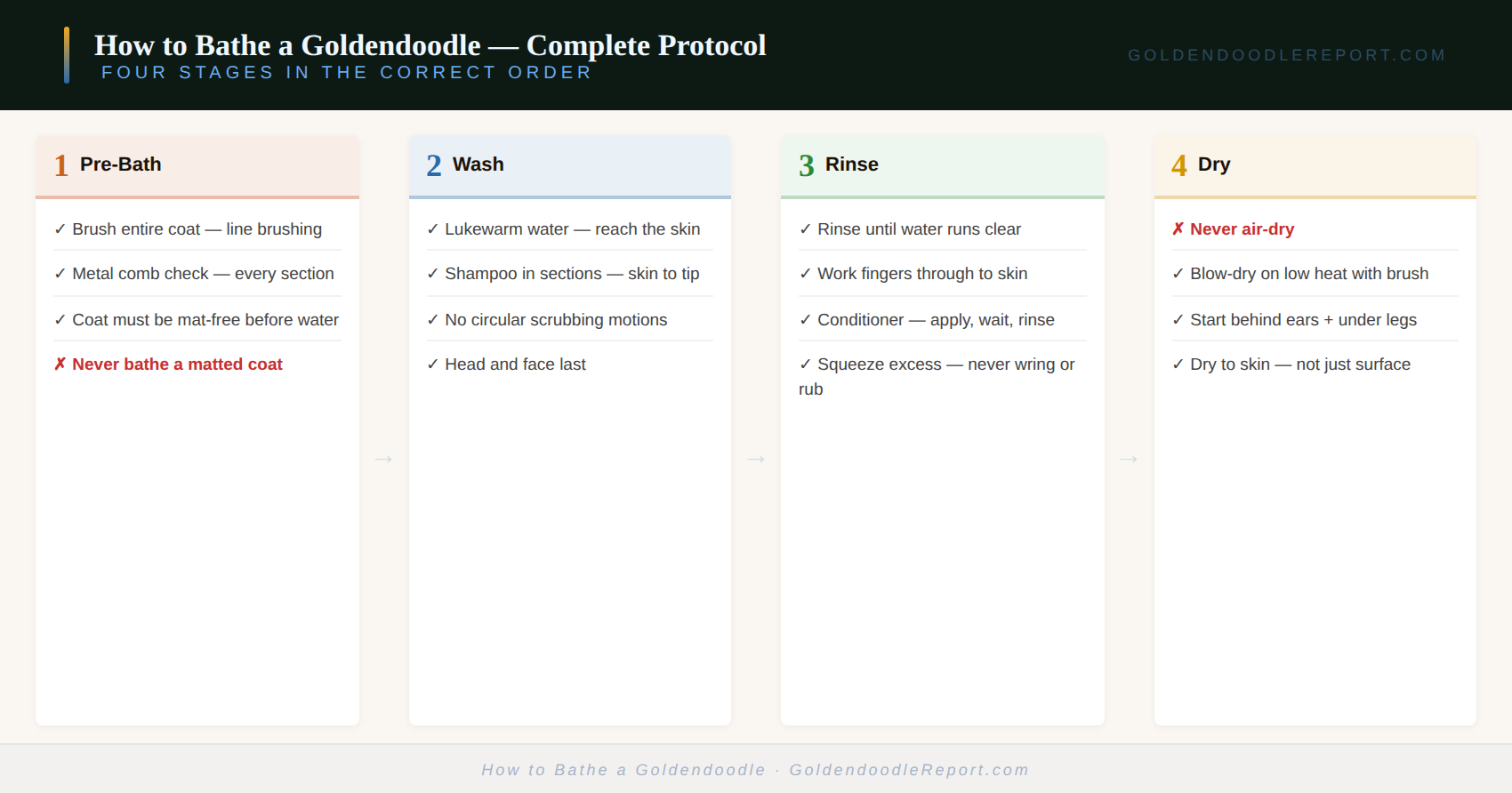
The single most important step in bathing a Goldendoodle correctly happens before the water is turned on: a complete brush-out and comb-check of the entire coat.
This step is skipped by most owners because it feels like extra work before something that will require drying and potentially more brushing afterwards. The reason it is non-negotiable is simple: water tightens tangles. A loose tangle that could be brushed out in 30 seconds becomes a solid mat after a bath. The water causes the coat fibres to swell and compress, converting every loose tangle in the coat into a mat that requires significant effort — or professional dematting — to remove.
The correct pre-bath routine: brush the entire coat using the line brushing technique, working in sections from skin to tip. After brushing, run the metal comb through every section from skin to tip. Only when the comb passes freely through every section — confirming the coat is completely mat-free to the skin — is the coat ready for bathing. If the comb catches anywhere, address that area before proceeding.
See How to Brush a Goldendoodle for the complete line brushing technique.
How to Bathe a Goldendoodle — The Complete Step-by-Step Protocol
Step 1 — Prepare the bathing area
Use a bath or large shower with a handheld showerhead if possible — a handheld attachment gives significantly more control over where the water goes and ensures you can reach the skin through the coat. Have your shampoo, conditioner if using, and towels ready before the dog enters the bath. Place a non-slip mat in the bottom of the bath — Goldendoodles who slip during bathing develop anxiety about the experience that is difficult to undo.
Step 2 — Wet the coat completely with lukewarm water
Use lukewarm water — not hot, not cold. Hot water opens the coat’s cuticle excessively and strips natural oils. Cold water does not penetrate a dense Goldendoodle coat effectively and makes the experience uncomfortable. Lukewarm — approximately body temperature — is the correct choice.
Wet the coat from the neck down, working toward the tail. Use your fingers to part the coat and direct water to the skin — the dense Goldendoodle coat repels water at the surface and needs manual help to become fully saturated. The coat is ready for shampoo when it is wet all the way to the skin across the entire body. Do not apply shampoo to a partially wet coat — it will not distribute evenly and will not rinse out cleanly.
Wet the head last — most dogs are more comfortable with this order and it reduces the risk of water in the ears during the main wetting phase. Fold the ear flaps down gently when wetting around the head to prevent excess water entering the ear canals.
Step 3 — Apply shampoo and work through the coat
Apply shampoo to the coat in sections — not all at once on the top of the head. Pour a small amount into your palm, work it between your hands to spread it, then apply it to a section of the coat. Work the shampoo through the coat from skin to tip in the same section-by-section approach as brushing — not in circular scrubbing motions. Circular scrubbing tangles the coat fibres and creates the same problem as surface-only bathing creates in brushing.
Work from the neck down the body, then the legs, then the underbelly. Do the head and face last using a small amount of shampoo applied carefully and avoided around the eyes and inside the ears. A tearless or specifically formulated facial wash is appropriate for the face and around the eyes.
Step 4 — Rinse completely
Rinse the coat until the water runs completely clear — no suds, no cloudiness. Incomplete rinsing leaves shampoo residue in the coat that causes skin irritation, dulls the coat, and can produce an unpleasant smell as it breaks down. The rinse typically takes longer than the shampooing — allow enough time for the water running off the coat to be genuinely clear before moving to the next step.
Work through the coat with your fingers during rinsing to ensure water reaches the skin and flushes shampoo out from the base of the coat, not just the surface.
Step 5 — Apply conditioner if using
Conditioner is particularly beneficial for curly and wavy Goldendoodle coats — it closes the coat’s cuticle after shampooing, reduces frizz, improves manageability, and makes brushing after drying significantly easier. Apply conditioner to the coat in sections avoiding the face, leave for the time specified on the product, then rinse completely. See 👉 Best Conditioner for Goldendoodles — coming soon for product recommendations.
Step 6 — Remove excess water
Once the final rinse is complete, use your hands to squeeze excess water from the coat — working down the body from neck to tail. Do not wring, twist, or rub the coat. Wringing and rubbing tangle the coat fibres and cause exactly the frizz and matting that the careful bathing process was designed to prevent. Squeeze gently, work systematically, then wrap the dog in a towel and apply gentle pressure to absorb remaining surface water. Do not rub with the towel.
When You Know How to Bathe a Goldendoodle — Drying Is the Critical Final Step
Drying is the most important and most neglected step in bathing a Goldendoodle. The coat condition after drying determines how manageable the coat is for the next three to four weeks — and whether post-bath smell becomes a recurring problem.
Never air-dry a Goldendoodle
A Goldendoodle coat that air-dries does so in whatever position the coat settles — typically compressed, tangled, and unevenly dried. The dense coat of a curly or wavy Goldendoodle retains moisture for hours when air-dried. That sustained moisture keeps the microorganisms living in the coat active and producing odour compounds — which is why air-dried Goldendoodles smell musty within days. Air-drying also allows the coat to dry in a set of tangles that become increasingly difficult to brush out as they dry.
The correct drying method
Use a dog dryer or a human hairdryer on a low-heat setting. Work through the coat in the same sections as brushing — part the coat, direct the dryer at the skin level, and brush the section while drying. The combination of heat, airflow, and brushing produces a properly dried, smoothly settled coat rather than a frizzy compressed one.
The order is the reverse of the bathing order — start with the areas that hold moisture longest: behind the ears, under the front legs, between the back legs, and the base of the tail. These are also the highest mat-risk areas and the areas where damp coat left to settle causes the most problems. Complete these areas first before moving to the easier-drying body coat.
The coat is dry when no cool or damp patches remain when you press your hand against the skin level. The surface feeling dry is not sufficient — the dense coat can feel dry on the surface while remaining significantly damp at the base. For detailed drying guidance see 👉 How to Dry a Goldendoodle Coat — coming soon.
How to Bathe a Goldendoodle — How Often Is Right?
Most Goldendoodles need bathing every 3–6 weeks at home. Curly coats: every 3–4 weeks. Wavy coats: every 4–5 weeks. Straight coats: every 5–6 weeks. Dogs who swim regularly or spend significant time outdoors may need bathing more frequently.
Bathing too frequently strips the coat’s natural oils and produces a dry, frizzy coat that is harder to manage and more prone to tangling. Bathing too infrequently allows dirt, oils, and microorganisms to accumulate in the coat — producing the skin and odour problems that owners then attempt to resolve by bathing more frequently, which worsens the underlying dryness.
The professional grooming appointment includes a bath — so the home bathing frequency should be calibrated around the professional schedule. A dog groomed professionally every six weeks who also needs home bathing every four weeks should be bathed at home approximately halfway between appointments. For the complete schedule see Goldendoodle Grooming Schedule.
Choosing the Right Products
Shampoo selection has a significant effect on how the Goldendoodle coat behaves after bathing. The wrong shampoo produces a dry, frizzy coat regardless of how correctly the bathing protocol is followed.
Use a shampoo formulated for dogs with long or curly coats — one that contains moisturising ingredients and does not strip the coat’s natural oils. Human shampoos are not appropriate for dogs — they are formulated for a different pH level and will irritate the skin with regular use. Avoid shampoos with harsh sulphates or artificial fragrances as the primary ingredients.
Conditioner is optional for straight coats and beneficial for wavy coats. For curly coats it is close to non-negotiable — the curl pattern is inherently prone to dryness and frizz, and conditioner after every bath significantly improves coat manageability. See 👉 Best Shampoo for Goldendoodles — coming soon for specific product recommendations.
For authoritative guidance on bathing dogs safely see the AKC dog bathing guide.
⚠️ The Most Common Bathing Mistakes
- Bathing without brushing first — converts loose tangles to mats. Always brush and comb-check before the bath
- Air-drying instead of blow-drying — causes post-bath smell and sets the coat in a compressed, tangled position
- Incomplete rinsing — shampoo residue causes skin irritation and dull coat
- Using human shampoo — wrong pH for dog skin, causes dryness and irritation with regular use
- Rubbing with a towel — tangles the coat fibres and causes frizz. Squeeze and press — never rub
- Hot water — strips natural oils and makes the coat dry and frizzy
✅ Your Next Step
Before your Goldendoodle’s next bath, complete a full brush-out and metal comb-check of the entire coat. If the comb passes freely through every section, the coat is ready. If it catches anywhere, address those areas before bathing. The pre-bath brush is the single step that prevents the most post-bath problems. For the complete grooming guide see Goldendoodle Grooming Guide.
🔑 Key Takeaways
- Always brush the coat completely before bathing — water tightens tangles into mats that are significantly harder to remove after the bath
- Use lukewarm water and work it through the coat to the skin before applying shampoo — a partially wet coat does not shampoo or rinse evenly
- Work shampoo through the coat in sections from skin to tip — not in circular scrubbing motions that tangle the fibres
- Rinse until the water runs completely clear — incomplete rinsing leaves residue that causes skin irritation
- Never air-dry — blow-dry completely with a brush after every bath. Air-drying causes post-bath smell and sets the coat in a compressed, tangled position
- Squeeze excess water — never rub or wring. Rubbing with a towel tangles the coat fibres and causes frizz
📚 Continue Learning
- Goldendoodle Grooming Guide — the complete grooming authority guide
- How to Brush a Goldendoodle — the pre-bath brush-out technique
- Goldendoodle Grooming Schedule — how bathing fits into the full schedule
- 👉 How to Dry a Goldendoodle Coat — coming soon
- 👉 Best Shampoo for Goldendoodles — coming soon
- 👉 Best Conditioner for Goldendoodles — coming soon
- 👉 Why Does My Goldendoodle Smell After a Bath — coming soon
- 👉 Goldendoodle Matting Prevention — coming soon
↑ Back to: Goldendoodle Grooming Guide | Goldendoodle Grooming — All Articles
Frequently Asked Questions
How to bathe a Goldendoodle at home — what is the correct sequence?
Brush and comb the coat completely before starting — this is the most important step. Wet the coat with lukewarm water working from neck to tail, ensuring water reaches the skin. Apply moisturising dog shampoo in sections and work it through from skin to tip. Rinse completely until water runs clear. Apply conditioner if using, then rinse again. Squeeze excess water without rubbing, then blow-dry fully with a brush. Never air-dry — it causes post-bath smell and mats.
How often should you bathe a Goldendoodle?
Most Goldendoodles need bathing every 3–6 weeks. Curly coats: every 3–4 weeks. Wavy coats: every 4–5 weeks. Straight coats: every 5–6 weeks. Active dogs or frequent swimmers may need bathing more often. Bathing too frequently strips natural oils and produces a dry, frizzy coat. Bathing too infrequently allows oil and dirt accumulation. The professional grooming appointment includes a bath — home bathing should be scheduled approximately halfway between professional appointments.
Why does my Goldendoodle smell after a bath?
Post-bath smell in Goldendoodles is almost always caused by incomplete drying. The dense coat retains moisture for hours when air-dried, keeping the microorganisms living in the coat active and producing odour compounds. Blow-drying fully after every bath — including the highest-risk moisture-retaining areas behind the ears and under the legs — eliminates post-bath smell in most cases. If the smell persists despite thorough drying, it may indicate a skin condition or ear infection that warrants veterinary assessment. See 👉 Why Does My Goldendoodle Smell After a Bath — coming soon.
Should I brush my Goldendoodle before or after a bath?
Always before — never after. This is the most important rule in bathing a Goldendoodle. Water tightens loose tangles into solid mats — a tangle that takes 30 seconds to brush out before a bath can take 30 minutes of professional dematting to remove after one. Brush and comb-check the entire coat before the bath. After the bath, brush while blow-drying — this is the correct post-bath brushing that settles the coat properly.
Can I use human shampoo on my Goldendoodle?
No — human shampoos are formulated for a different pH level than dog skin. Regular use of human shampoo on a dog causes skin dryness, irritation, and disrupts the natural skin barrier. Use a shampoo specifically formulated for dogs, ideally one designed for long or curly coats. A moisturising formula appropriate for the coat type will produce significantly better coat condition than human shampoo regardless of how premium the human product is.
Disclaimer: The information in this article is provided for general educational purposes only. King James Adjei is a researcher and enthusiast, not a veterinarian or certified groomer. For health concerns or grooming questions specific to your dog’s condition, consult a qualified veterinarian or professional groomer.