Affiliate Disclosure: Some links in this guide are affiliate links. If you purchase through them, we may earn a small commission at no extra cost to you. Read our full affiliate disclaimer here.
By King James Adjei — Researcher and Goldendoodle enthusiast, founder of GoldendoodleReport.com. Every guide on this site is carefully researched and written to give owners reliable, clearly organised information — updated regularly and honest about uncertainty. → About this site
📖 7-minute read | Last updated April 2026 | Reviewed for accuracy
The winter Goldendoodle haircut decision is different from the summer one — and so are the problems that come with them. In summer, the main concern is heat management and choosing a shorter style. In winter, the concern is the opposite: many owners allow their Goldendoodle’s coat to grow longer for warmth and then discover that a longer winter coat creates the conditions for the worst mat problems of the year. This guide covers the correct winter coat length, how to balance warmth with mat prevention, when to schedule professional grooming through the cold months, and how to prepare the coat for the spring transition.
👤 Who This Guide Is For
- You want to know the best Goldendoodle haircut for winter and how long to keep the coat
- Your dog’s coat mats significantly worse in winter and you want to understand why
- You are transitioning from a summer cut and want to know how to manage the grow-out
- You want to understand how to prepare your Goldendoodle’s coat for spring after winter
⚡ Quick Summary
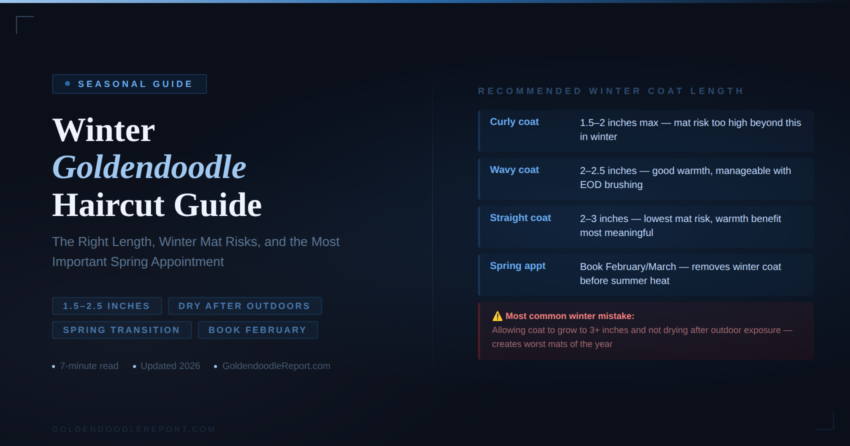
The ideal winter Goldendoodle haircut is longer than the summer style but not as long as many owners allow. A puppy cut at 1.5 to 2 inches or a moderate teddy bear cut at 2 to 2.5 inches provides meaningful warmth while remaining manageable. Coats allowed to grow to 3 inches or beyond in winter create the highest mat risk outside of the puppy coat transition — winter moisture, indoor heating, and reduced outdoor activity all accelerate mat formation. The spring transition — removing the winter coat in late March or April — is the most important grooming appointment of the year.
✅ Quick Answer — Winter Goldendoodle Haircut
- Recommended winter length: 1.5 to 2.5 inches depending on coat type and climate
- Curly coats: Stay at 1.5 to 2 inches maximum — mat risk outweighs warmth gain at longer lengths
- Wavy coats: 2 to 2.5 inches — provides warmth with manageable maintenance
- Straight coats: Up to 2.5 to 3 inches — lowest mat risk, warmth benefit is more meaningful
- Most important appointment: Spring transition in late March or April — removes the winter coat before summer
For the summer haircut guide see Summer Goldendoodle Haircut Guide. For the complete haircut styles overview see Goldendoodle Haircut Styles.
The Winter Goldendoodle Haircut Reality — More Length Means More Mat Risk
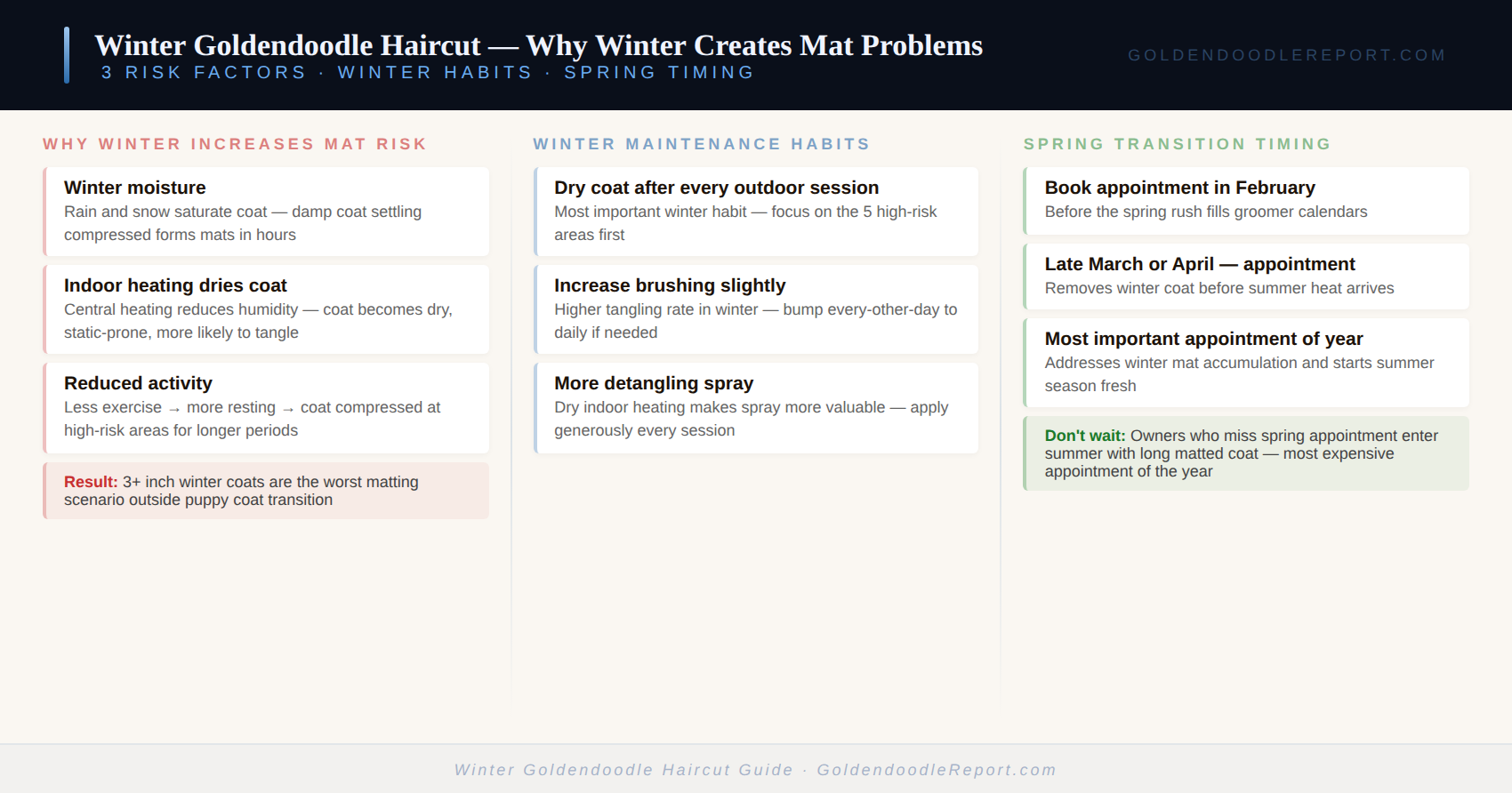
The instinct to let a Goldendoodle’s coat grow long in winter for warmth is understandable — but it consistently creates the worst matting problems of the year. Three winter-specific factors combine to make longer coats especially prone to matting in cold weather:
Winter moisture. Rain, snow, sleet, and even heavy damp air saturate the Goldendoodle’s coat during outdoor time. A longer coat holds this moisture longer than a shorter one, creating extended periods of damp, compressed coat — exactly the conditions that form mats fastest. A dog who comes in from the snow with a 3-inch coat and air-dries on their bed is setting up mats that will require professional dematting within days.
Indoor heating. Central heating reduces indoor humidity significantly. Low humidity causes the coat fibres to dry out and become more prone to static, tangles, and breakage. The combination of damp outdoor exposure and dry indoor heating creates the most difficult coat conditions of the year — alternating between damp and dry multiple times per day.
Reduced activity. Dogs often get less vigorous outdoor exercise in cold, wet weather — which means less natural coat movement to prevent compression. A dog lying on a warm bed for extended periods in a long winter coat is compressing their coat at the high-risk areas continuously.
Winter Goldendoodle Haircut Length by Coat Type
Curly coat — 1.5 to 2 inches maximum
Curly coats carry the highest year-round mat risk. In winter, this risk is elevated further by the moisture and heating factors above. A curly-coated Goldendoodle at 3 inches in winter will develop significant matting within weeks without daily brushing of exceptional thoroughness. The warmth benefit of the extra length does not justify the mat risk for most owners. Keep the winter coat at 1.5 to 2 inches, maintain with daily brushing, and the dog will be both warm enough and manageable.
Wavy coat — 2 to 2.5 inches
Wavy coats at 2 to 2.5 inches provide meaningful warmth in cold weather and are manageable with every-other-day brushing and consistent post-outdoor drying. This is the recommended range for wavy-coated Goldendoodles in most winter climates. Going above 2.5 inches significantly increases the mat risk without a proportionate increase in warmth. A well-maintained 2-inch wavy coat provides adequate insulation for most cold climates.
Straight coat — 2 to 3 inches
Straight coats are the most forgiving in winter — the lower mat risk of the straight coat allows slightly longer lengths without the mat problems that would develop on curly or wavy coats at the same length. A straight-coated Goldendoodle at 2.5 to 3 inches in winter is manageable with brushing every 3 to 4 days and careful post-wet drying. The warmth benefit of the fuller coat is more meaningful for straight coats because the coat lies flat and traps air more effectively than the looser structure of wavy coats.
Winter Coat Maintenance — What Changes in Cold Weather
Winter requires adjustments to the standard brushing routine — specifically around post-outdoor care and coat drying.
Dry the coat after every outdoor session. This is the most important winter-specific maintenance habit. A dog who comes in from rain, snow, or even a heavy dew should have their coat dried before they settle on their bed or sofa. Focus on the five high-risk areas — behind the ears, under the front legs, around the collar, at the tail base, between the back legs — because these areas hold moisture the longest and mat fastest when damp and compressed. See How to Dry a Goldendoodle Coat for the correct drying technique.
Increase brushing frequency slightly. The combination of winter moisture and indoor heating typically means the coat needs slightly more frequent brushing than in other seasons to compensate for the increased tangling rate. If the standard routine is every other day, consider brushing daily during the wettest winter months. If daily, ensure thoroughness is maintained — it is easy for sessions to become rushed in cold weather when neither owner nor dog wants extended grooming time.
Detangling spray is more important in winter. The dry indoor heating that causes coat dryness and static makes detangling spray more valuable than in summer. Apply generously before every brushing session throughout winter. See Goldendoodle Matting Prevention for the complete prevention protocol.
Professional Grooming Through Winter
Many owners stretch professional grooming intervals in winter — either because they assume less is needed at shorter lengths, or because the cold weather makes the effort of transporting the dog less appealing. Neither is a good reason to extend the interval significantly.
Professional grooming every 6 to 8 weeks should continue through winter regardless of the coat length decision. At the winter length of 1.5 to 2.5 inches, the coat still grows and the professional appointment addresses the shaping, mat removal, and detail work that home brushing cannot fully replace. A dog who arrives at a winter appointment with mat accumulation because the owner stretched the interval to 12 weeks will have a significantly longer, more expensive, and more uncomfortable appointment than one who arrives on schedule.
After the Winter Goldendoodle Haircut — The Spring Transition
The spring transition appointment — scheduled for late March or April in most temperate climates — is the most important grooming appointment of the Goldendoodle’s year. This appointment removes the winter coat and prepares the dog for summer before the heat arrives.
The spring coat at the end of winter is typically the longest and densest of the year. If the winter coat has been maintained at 2 inches and has grown out over 3 to 4 months of winter, it may now be at 3 to 4 inches — approaching or exceeding the length at which mat formation accelerates dramatically. The spring appointment takes the coat back to the summer length before the hot weather arrives, addressing any winter mat accumulation and starting the warm season fresh.
Many groomers have a significant spring rush — book the spring transition appointment in February or early March to secure the right timing. A dog who misses the spring appointment and enters summer with a long winter coat is uncomfortable, overly hot, and arriving at a summer appointment with significant mat accumulation that increases the cost and duration of the appointment. See Summer Goldendoodle Haircut Guide for what to expect at the spring transition appointment.
For authoritative guidance on dog grooming see the AKC dog grooming guide.
✅ Your Next Step
If you are heading into winter, book the next professional grooming appointment now and tell your groomer you want the coat maintained at 2 inches for winter. If you are heading into spring, book the spring transition appointment before the rush — late February or early March for most climates. For the complete grooming guide see Goldendoodle Grooming Guide.
🔑 Key Takeaways
- Allowing the coat to grow very long in winter creates the worst mat problems of the year — winter moisture, indoor heating, and reduced activity combine to accelerate mat formation at longer lengths
- Recommended winter lengths: curly coats 1.5 to 2 inches, wavy coats 2 to 2.5 inches, straight coats 2 to 3 inches
- Dry the coat thoroughly after every outdoor session — damp coat settling compressed in cold weather forms mats faster than any other scenario
- Continue professional grooming every 6 to 8 weeks through winter — stretching intervals significantly increases mat accumulation and appointment cost
- The spring transition appointment in late March or April is the most important grooming appointment of the year — book it early before the spring rush
- Detangling spray is more important in winter due to dry indoor heating — use it generously before every brushing session
📚 Continue Learning
- Goldendoodle Grooming Guide — the complete grooming authority guide
- Goldendoodle Haircut Styles — all styles compared
- Summer Goldendoodle Haircut Guide — the other half of the seasonal strategy
- Goldendoodle Coat Types Explained — how coat type affects winter decisions
- How to Dry a Goldendoodle Coat — essential post-outdoor drying in winter
- Goldendoodle Matting Prevention — winter mat prevention protocol
- How to Brush a Goldendoodle — increased winter brushing frequency
- 👉 Goldendoodle Grooming Calendar by Season — coming soon
↑ Back to: Goldendoodle Haircut Styles | Goldendoodle Grooming Guide | Goldendoodle Grooming — All Articles
Frequently Asked Questions
What length should a winter Goldendoodle haircut be?
A moderate length — 1.5 to 2.5 inches depending on coat type — provides meaningful warmth without the mat problems that come with very long winter coats. Allowing the coat to grow to 3 inches or beyond in winter creates the worst mat conditions of the year due to the combination of winter moisture, dry indoor heating, and compressed coat during rest. The warmth benefit of the extra length beyond 2 to 2.5 inches is marginal; the mat risk increase is significant.
What is the best winter haircut for a Goldendoodle?
A puppy cut at 1.5 to 2 inches or a moderate teddy bear cut at 2 to 2.5 inches provides a good balance of warmth and manageability for most coat types. Curly coats should stay at the lower end of this range — 1.5 to 2 inches — because the mat risk at longer lengths is too high in winter conditions. Straight coats can comfortably go to 2.5 to 3 inches with appropriate brushing and post-outdoor drying.
Why does my Goldendoodle mat more in winter?
Three winter-specific factors combine to increase mat formation: winter moisture from rain and snow saturates the coat and creates extended damp periods; dry indoor heating reduces coat moisture and increases static and tangling; and reduced outdoor activity means the dog rests for longer periods in positions that compress the coat at the high-risk areas. Keeping the coat at a moderate length, drying after every outdoor session, and maintaining daily brushing with detangling spray are the three habits that address all three causes.
When should I book the spring grooming appointment?
February or early March for most temperate climates — before the spring rush fills grooming calendars. The spring transition appointment removes the winter coat and prepares the dog for summer before the hot weather arrives. It is the most important professional grooming appointment of the year. Many owners who wait until April or May find their groomer’s earliest available appointment is weeks away — by which point the dog is entering summer with a long winter coat that is uncomfortable and mat-prone.
Disclaimer: The information in this article is provided for general educational purposes only. King James Adjei is a researcher and enthusiast, not a veterinarian or certified groomer. For health concerns related to cold weather or coat-specific conditions, consult your veterinarian or a qualified professional groomer.