Affiliate Disclosure: Some links in this guide are affiliate links. If you purchase through them, we may earn a small commission at no extra cost to you. Read our full affiliate disclaimer here.
By King James Adjei — Researcher and Goldendoodle enthusiast, founder of GoldendoodleReport.com. Every guide on this site is carefully researched and written to give owners reliable, clearly organised information — updated regularly and honest about uncertainty. → About this site
📖 7-minute read | Last updated April 2026 | Reviewed for accuracy
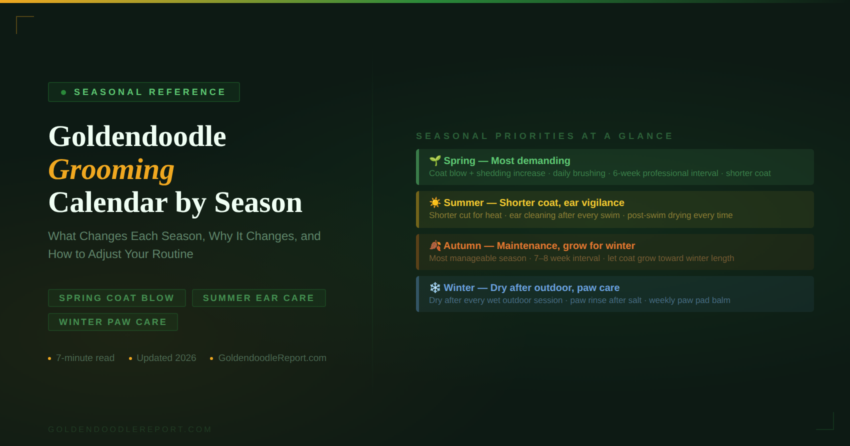
A Goldendoodle’s grooming needs are not the same throughout the year. Seasonal changes in temperature, activity level, and coat cycle produce specific grooming requirements in each season — and owners who understand the seasonal pattern can adjust their routine proactively rather than reacting to problems as they appear. This calendar covers what each season demands, why it demands it, and how to adjust the grooming routine accordingly.
⚡ Quick Summary by Season
- Spring: The most demanding season — coat blow (if puppy-to-adult transition is occurring), increased shedding, daily brushing non-negotiable, professional appointment every 6 weeks
- Summer: Shorter coat for heat management, post-swim ear cleaning after every water session, increased outdoor activity means more between-visit cleaning
- Autumn: Maintenance season — coat grown to desired length, consistent brushing, seasonal shedding increase toward late autumn
- Winter: Longer coat for warmth, increased drying needs after outdoor exposure, paw and paw pad care for cold and ice, consistent brushing despite reduced outdoor activity
For the complete grooming schedule see Goldendoodle Grooming Schedule. For the complete grooming overview see Goldendoodle Grooming Guide.
Spring — The Most Demanding Season
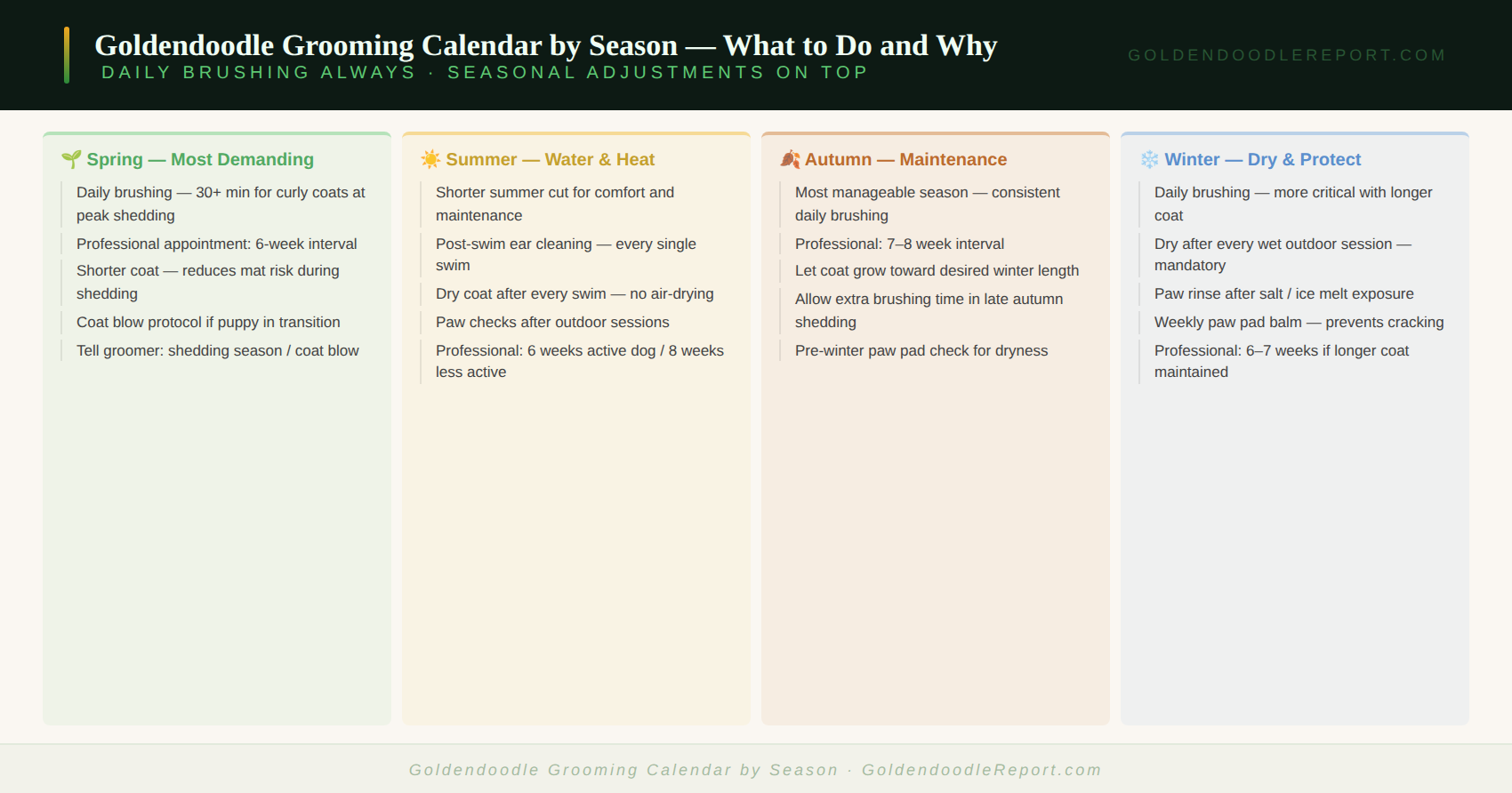
Spring is the highest-maintenance grooming season for most Goldendoodles, for two related reasons: the spring seasonal shedding increase, and — for puppies in their first or second spring — the puppy coat transition (coat blow) that often coincides with the spring months.
Seasonal shedding in spring. Adult Goldendoodles experience increased loose coat in spring as the body sheds the denser winter coat. While Goldendoodles are lower-shedding than many breeds, this increase is real and noticeable — more loose coat in the base layer, faster tangle formation, and more coat in the brush during sessions. Daily brushing during spring shedding is non-negotiable regardless of whether the dog is also in coat blow.
Coat blow for puppies. The puppy-to-adult coat transition (coat blow) typically begins between 6 and 14 months of age. For many puppies, this coincides with spring. During coat blow, the loose puppy coat becomes entangled with the incoming adult coat at the base layer — creating the worst mat conditions of the dog’s life. See Goldendoodle Coat Blowing Guide for the complete protocol.
Spring grooming adjustments:
- Brushing: daily without exception — curly coats may need 30+ minute sessions during peak shedding
- Professional appointment: move to 6-week interval if normally on 8 weeks
- Tell the groomer it is shedding season or coat blow — this changes how they approach the appointment
- Coat length: ask the groomer to keep the coat shorter during spring to reduce mat risk during heavy shedding
- Post-outdoor cleaning: increased muddy walks and rain mean more between-visit spot cleaning
Summer — Shorter Coat, Water Exposure, Ear Vigilance
Summer grooming priorities shift from mat prevention toward heat management and water-related care. Increased outdoor activity — swimming, long walks, outdoor play — produces specific grooming demands.
Coat length for summer. A shorter coat in summer is more comfortable for the dog and easier to maintain given the increased activity and outdoor exposure. The summer coat cut does not need to be a shave-down — a shorter version of the dog’s normal style keeps the dog cooler and reduces mat risk during the active season. See Summer Goldendoodle Haircut Guide. Never shave a Goldendoodle coat to the skin — the coat provides UV protection and the shaved coat does not regrow as heat-resistant as the intact coat.
Post-swim ear cleaning. Swimming is the single biggest ear infection risk for Goldendoodles. Water trapped in the ear canal after swimming creates exactly the warm, moist conditions that bacteria and yeast thrive in. Every swimming session — even short ones — should be followed by ear cleaning with a veterinarian-formulated drying ear cleaner within 24 hours. This single habit prevents most swimming-related ear infections. See Preventing Ear Infections in Doodles.
Post-swim coat drying. After every swim, the coat must be dried properly — not left to air-dry. A coat that air-dries after swimming dries compressed and develops new tangles throughout the base layer. Towel dry the high-risk areas immediately, then finish with a dryer. See How to Dry a Goldendoodle Coat.
Summer grooming adjustments:
- Professional appointment: 6-week interval for active outdoor dogs; 8 weeks for less active
- Ear cleaning: within 24 hours of every swim — use a drying formula
- Post-swim drying: every time — non-negotiable
- Paw checks: after every outdoor session, check paws for grass seeds, burrs, or debris that can penetrate paw pad skin
- Spot cleaning: more frequent muddy or dusty sessions mean more between-visit paw and lower coat cleaning
Autumn — Maintenance Season, Preparing for Winter
Autumn is typically the most manageable grooming season for most Goldendoodles. The shedding increase of spring has resolved, coat blow (for first-year dogs) is usually complete by autumn, and the weather is moderate enough that neither heat nor cold creates urgent grooming demands.
Late autumn brings a second, more modest shedding increase as the body prepares the denser winter coat. This is typically less intense than the spring shedding but worth anticipating — brushing sessions may take slightly longer in late October and November than in July or August.
Coat length for autumn. Autumn is the time to let the coat grow toward the desired winter length. A dog who had a shorter summer cut should be allowed to grow through autumn rather than being cut short again — the aim is to have the coat at the desired winter length by the first cold month. If the dog is kept shorter year-round by preference, this consideration does not apply.
Autumn grooming adjustments:
- Brushing: daily — the consistent standard regardless of season
- Professional appointment: 7 to 8 week interval for most coat types
- Coat length decision: begin growing toward desired winter length if applicable
- Late autumn brushing sessions: allow extra time as the seasonal shedding increase arrives
- Pre-winter paw check: look for cracking or dryness in paw pads before cold weather arrives
Winter — Longer Coat, Drying After Outdoor Exposure, Paw Care
Winter grooming challenges are different from the other seasons — less about shedding management and more about the physical demands of cold, wet, and potentially icy conditions on the coat and paws.
Longer coat for warmth. Many owners choose to keep the coat slightly longer in winter for warmth. A longer coat provides some insulation benefit in cold weather — though Goldendoodles are not bred for extreme cold and should not be expected to tolerate sustained outdoor exposure in very cold conditions regardless of coat length. Longer coats require more vigilant brushing — the same mat risk increases as the coat depth increases. See Winter Goldendoodle Haircut Guide.
Post-outdoor drying in winter. Rain, sleet, snow, and morning frost mean the coat gets wet more consistently in winter than in summer. Each wet outdoor session that is not properly dried produces new tangles. This is one of the most common causes of mat build-up in winter for dogs who are brushed but not properly dried after outdoor exposure. Post-outdoor drying becomes as important as brushing in winter months.
Paw and paw pad care. Ice, salt, and cold surfaces affect the paw pads in winter. Salt and ice melt products irritate and dry the paw pads — rinse paws with warm water after every walk on treated surfaces. Cold surfaces can cause cracking of dry paw pads — a paw pad balm applied weekly helps maintain elasticity. Check between the toes for ice ball formation in freezing weather. See How to Trim Goldendoodle Paw Pads for paw maintenance.
Winter grooming adjustments:
- Brushing: daily — even more important with longer winter coat
- Professional appointment: 7 to 8 weeks — increase to 6 weeks if longer coat is being maintained
- Post-outdoor drying: after every wet outdoor session — no air-drying
- Paw care: rinse after salt exposure · paw pad balm weekly · check for ice balls
- Ear cleaning: maintain routine every 2 to 4 weeks — heating in the home can dry ear canals in winter
For authoritative guidance on seasonal dog care see the AKC dog grooming guide.
✅ Your Next Step
Identify which season you are currently in and check the adjustments listed above against your current routine. The most common seasonal gap owners miss is not adjusting professional appointment frequency during spring — moving from 8 weeks to 6 weeks during spring shedding (or coat blow) prevents the mat accumulation that arrives at the summer appointment as a dematting surcharge. For the complete grooming guide see Goldendoodle Grooming Guide.
🔑 Key Takeaways
- Spring is the most demanding grooming season — seasonal shedding increase plus potential coat blow requires daily brushing and shortened professional appointment intervals
- Summer requires post-swim ear cleaning after every swimming session — the single most effective ear infection prevention measure for active dogs
- Autumn is the most manageable season — consistent maintenance with a late-autumn brushing time increase as the seasonal shedding begins
- Winter requires daily drying after outdoor exposure and consistent paw pad care — longer coats in winter increase mat risk and require proportionally more brushing vigilance
- Daily brushing is the one constant across all seasons — every seasonal adjustment is in addition to daily brushing, not instead of it
- Communicating the current season and coat condition to the groomer at each appointment ensures the professional session addresses the season’s specific demands
📚 Continue Learning
- Goldendoodle Grooming Guide — complete grooming authority guide
- Goldendoodle Grooming Schedule — the full year schedule
- Goldendoodle Coat Blowing Guide — the spring coat blow in detail
- Summer Goldendoodle Haircut Guide — summer coat decisions
- Winter Goldendoodle Haircut Guide — winter coat decisions
- Preventing Ear Infections in Doodles — summer swimming ear care
- How to Trim Goldendoodle Paw Pads — winter paw maintenance
↑ Back to: Goldendoodle Grooming Schedule | Goldendoodle Grooming Guide | Goldendoodle Grooming — All Articles
Frequently Asked Questions
When do Goldendoodles need the most grooming?
Spring is the most grooming-intensive season for most Goldendoodles. The combination of seasonal shedding increase and — for first or second year dogs — the puppy coat transition (coat blow) creates the highest mat risk of the year. Daily brushing and a shorter professional appointment interval (6 weeks rather than 7 to 8) are the correct response to spring grooming demands.
Should I cut my Goldendoodle’s hair shorter in summer?
Yes — a shorter summer coat is more comfortable in heat and easier to maintain given increased outdoor activity. The cut does not need to be extreme — a shorter version of the dog’s normal style achieves the comfort and maintenance benefits without the risks associated with very short or shaved coats. Shaving to the skin is not recommended — the coat provides UV protection and the natural coat regulates temperature better than bare skin in most conditions. See Summer Goldendoodle Haircut Guide.
Do Goldendoodles shed more in certain seasons?
Yes — most Goldendoodles experience a shedding increase in spring as the denser winter coat is shed, and a more modest increase in late autumn as the winter coat comes in. Neither shedding season is as dramatic as in double-coated breeds, but the increase is real and produces increased brushing requirements and faster tangle formation during these periods. Owners who are used to a consistent brushing time should allow extra time during spring and late autumn sessions.
How does grooming change in winter for Goldendoodles?
The primary winter adjustment is consistent drying after every outdoor exposure — rain, sleet, and snow mean the coat gets wet more regularly in winter, and each air-dried wet coat produces new tangles. Paw care becomes more important — salt and ice melt products require post-walk paw rinsing, and cold dry surfaces need weekly paw pad balm to prevent cracking. A longer winter coat requires proportionally more vigilant brushing than a shorter summer coat. Professional appointment frequency should increase slightly if a longer coat is being maintained.
Disclaimer: The information in this article is provided for general educational purposes only. King James Adjei is a researcher and enthusiast, not a veterinarian or certified groomer. Seasonal grooming needs vary by individual dog, coat type, climate, and activity level.