Affiliate Disclosure: Some links in this guide are affiliate links. If you purchase through them, we may earn a small commission at no extra cost to you. Read our full affiliate disclaimer here.
By King James Adjei — Researcher and Goldendoodle enthusiast, founder of GoldendoodleReport.com. Every guide on this site is carefully researched and written to give owners reliable, clearly organised information — updated regularly and honest about uncertainty. → About this site
📖 6-minute read | Last updated April 2026 | Reviewed for accuracy
Keeping a Goldendoodle clean and fresh between professional grooming visits is a practical challenge — particularly for active dogs who swim, run in muddy parks, or simply accumulate the everyday smells that a dense coat traps effectively. A professional groom every 6 to 8 weeks is the standard, but the coat needs maintenance attention in the weeks between appointments. This guide covers the specific between-visit scenarios owners encounter most and the right response to each.
👤 Who This Guide Is For
- Your Goldendoodle gets dirty, smelly, or dishevelled between professional grooming appointments
- You want practical between-visit cleaning strategies that do not require a full bath every time
- You want to understand when a full bath is necessary versus when spot cleaning is sufficient
- You want to know which products are useful for between-visit freshening
⚡ Quick Summary
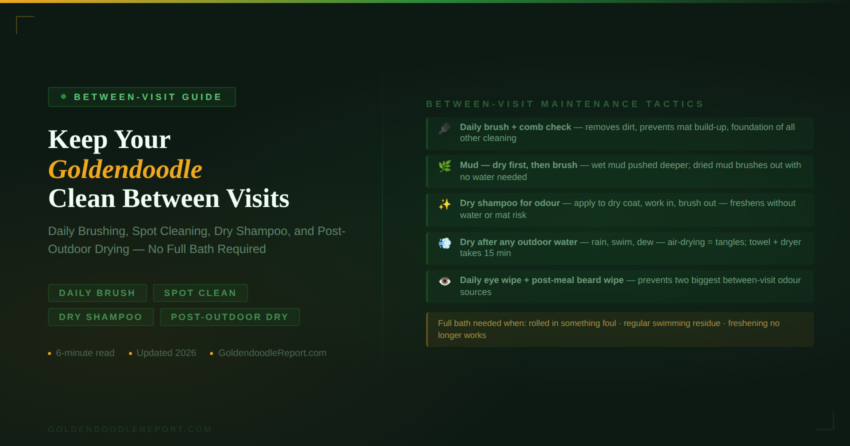
Between-visit coat maintenance rests on four pillars: daily brushing (which prevents the coat condition deteriorating between appointments), targeted spot cleaning for specific dirty areas, dry shampoo for freshening between full baths, and post-outdoor drying to prevent the compressed tangling that makes between-visit maintenance harder. A full bath is not always needed between professional appointments — most between-visit cleaning needs can be addressed with targeted spot cleaning plus dry shampoo for a fresh coat without the full bathing time commitment.
For the full bathing technique see How to Bathe a Goldendoodle. For the grooming schedule see Goldendoodle Grooming Schedule.
Daily Brushing — The Foundation of Between-Visit Maintenance
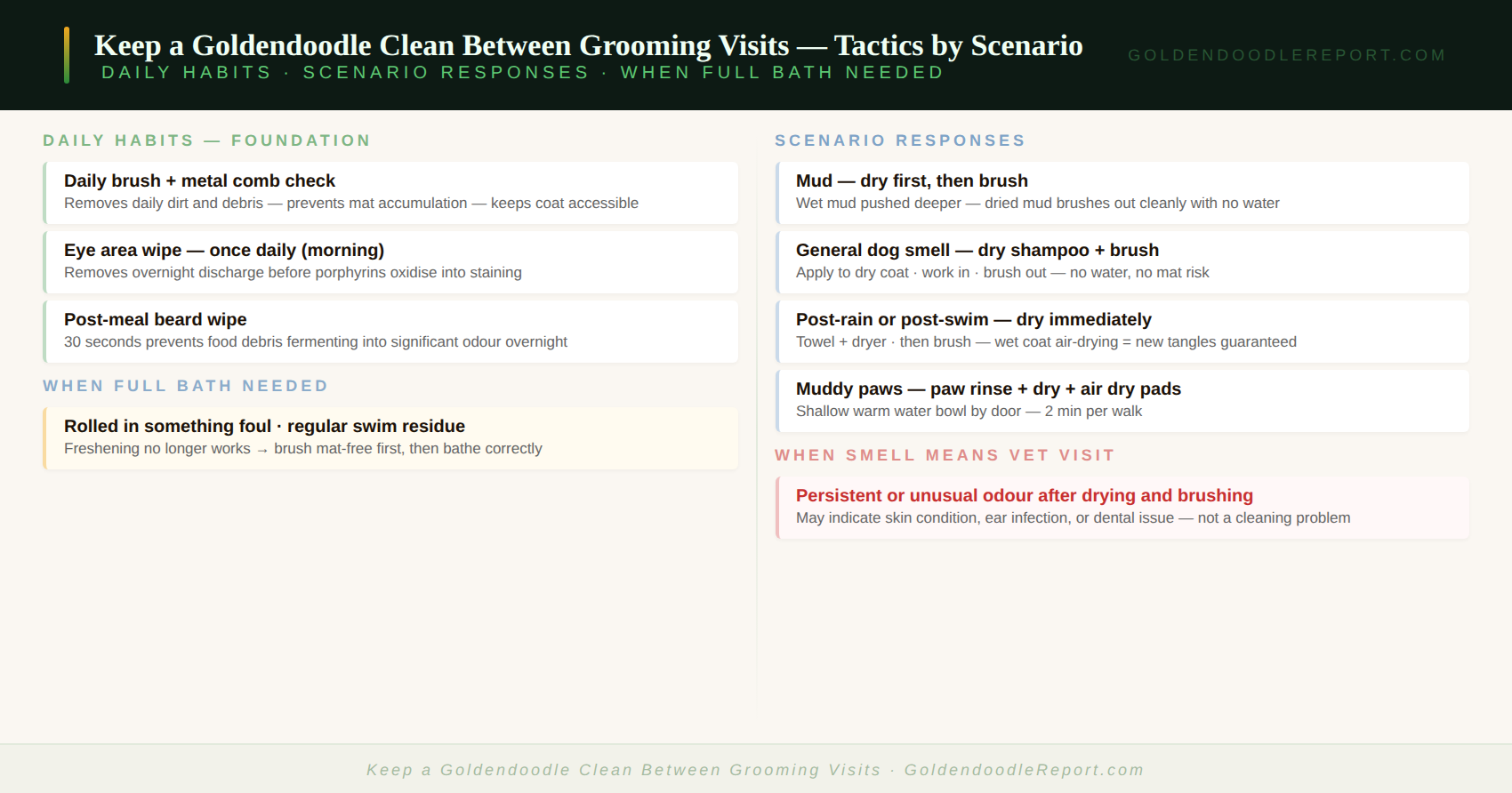
Before any other between-visit cleaning strategy, daily line brushing is what determines how manageable the coat stays between appointments. A coat that is brushed daily with a metal comb check stays mat-free, maintains its structure, and is easier to spot-clean and freshen because the coat fibres are separated and accessible. A coat that is not brushed for a week develops base-layer matting that traps dirt and odour at the skin level — making every other cleaning method less effective.
Daily brushing is not just a mat prevention tool — it is an active cleaning action. Each brushing session removes loose dirt, debris, dried mud, dead coat, and surface contamination from the previous day’s outdoor activities. A well-brushed coat looks and smells significantly fresher than an identical coat that has not been brushed. See How to Line Brush a Goldendoodle.
Muddy Paws and Legs — Targeted Spot Cleaning
Muddy paws and lower legs are the most common between-visit cleaning challenge for active Goldendoodles. The correct response depends on the extent of the mud and how far it has penetrated the coat.
Surface mud that has dried: Allow the mud to dry completely, then brush through the affected sections with the slicker brush. Dried mud breaks up significantly more easily than wet mud, and much of it will come out through brushing alone. Follow with a metal comb check. This is the most common scenario and usually requires no water at all.
Wet mud in the coat: Do not brush through wet mud — it pushes the mud deeper into the coat and makes it harder to remove. Rinse the affected areas with warm water, work a small amount of dog shampoo through the rinsed coat, rinse thoroughly, and dry the rinsed sections with a towel and then a dryer before the rest of the coat dries compressed. This is a targeted partial wash — not a full bath.
Paws specifically: A shallow bowl of warm water and a small towel kept near the door for post-walk paw cleaning is one of the most practical between-visit tools. Dip each paw, work between the pads to remove grit and debris, towel dry, and allow to air dry completely. For paws that are mud-heavy from the park, a paw-cleaning cup (a cylinder with soft rubber bristles inside) makes this faster and less messy.
Managing Coat Odour Between Baths
Goldendoodles can develop noticeable coat odour between baths — particularly dogs who swim, play in rain, or simply accumulate the natural bacterial and environmental odours that a dense coat traps. Before assuming a full bath is needed, assess which type of odour it is.
General “dog smell” — freshening approach: This is the everyday accumulation of environmental odour in the coat. It does not indicate a health issue and typically responds well to dry shampoo plus brushing. Dog-formulated dry shampoo absorbs sebum and surface odour from the coat without requiring water — apply to dry coat, work through with hands, then brush out. The coat comes out significantly fresher without any drying time or mat compression risk.
Post-rain or post-swim wet dog smell: This is caused by bacteria and yeast that are naturally present on the skin and coat becoming more active when wet. The smell typically resolves once the coat is fully dry. The correct response is thorough drying — towel dry immediately after water exposure, then finish with a dog dryer or human dryer on cool — followed by a brushing session. If the smell persists after the coat has fully dried, a targeted wash of the affected area may be needed.
Persistent or unusual odour: An odour that does not resolve with drying and brushing, or that has a noticeably different character from normal dog smell, may indicate a skin condition, ear infection, anal gland issue, or dental problem. These are health issues that cleaning will not resolve — a veterinary assessment is appropriate. See Why Does My Goldendoodle Smell After a Bath for the complete odour cause guide.
Eye Area and Beard Maintenance
The area around the eyes and the beard (the longer fur around the muzzle) accumulates food debris, tear discharge, and outdoor contamination faster than most other coat areas. Between visits, daily cleaning of these areas keeps the dog looking and smelling fresh without requiring a bath.
Eye area: daily wipe with an ophthalmologically tested dog eye wipe removes overnight tear discharge before it oxidises into tear staining. This is the most effective between-visit eye maintenance available. See Goldendoodle Tear Stains Guide.
Beard and muzzle: after every meal, wipe the beard with a damp cloth or unscented dog wipe to remove food residue. Food debris left in the beard ferments and produces significant odour within 24 to 48 hours. A 30-second post-meal wipe prevents the most common source of face odour between visits.
Post-Outdoor Drying — Preventing the Biggest Between-Visit Problem
The most consequential single between-visit action is drying the coat properly after any significant outdoor water exposure — rain, swimming, morning dew on long grass, paddling in water. A Goldendoodle coat left to air-dry after outdoor water exposure dries compressed, develops new tangles, and — if this happens repeatedly between appointments — arrives at the next professional appointment in significantly worse condition than when it left the previous one.
After any meaningful outdoor water exposure: towel dry the highest-risk areas first (under the front legs, around the collar, the muzzle, and the tail base), then use a dog dryer or human dryer on cool to finish drying the coat fully. Follow with a brushing session to check for any tangles formed during drying. This 15 to 20 minute routine after every significant outdoor exposure is the most effective single investment of time for between-visit coat maintenance. See How to Dry a Goldendoodle Coat.
When a Between-Visit Full Bath Is Actually Needed
Not every between-visit cleaning situation requires a full bath. The scenarios that warrant a full bath between professional appointments:
The dog has rolled in something particularly foul — faeces, decomposing material, or other strongly odorous substances that partial cleaning cannot address. A full bath with appropriate shampoo is the correct response.
The dog has been swimming regularly and the coat is showing accumulated chlorine, salt water, or freshwater residue that has made the coat dry and difficult to manage. A full conditioning bath restores the coat.
The overall coat smell or condition has deteriorated to the point where freshening approaches no longer produce a satisfactory result — a reset bath is needed.
Always brush and comb-check to confirm the coat is mat-free before bathing. See How to Bathe a Goldendoodle for the full technique.
For authoritative guidance on dog hygiene see the AKC dog grooming guide.
✅ Your Next Step
Establish two daily habits: brush every day with a metal comb check, and wipe the eye area and beard after meals. These two actions alone will keep the coat in significantly better condition between visits than any other between-visit investment. Add post-outdoor drying after any significant water exposure, and spot-clean rather than full-bathing for targeted dirty areas. For the complete grooming guide see Goldendoodle Grooming Guide.
🔑 Key Takeaways
- Daily brushing is the foundation of between-visit maintenance — it removes surface dirt, prevents mat build-up, and keeps the coat accessible for other cleaning methods
- Allow mud to dry before brushing — dried mud brushes out significantly more easily than wet mud pushed deeper into the coat
- Dog-formulated dry shampoo freshens between baths without the mat compression risk of water
- Post-outdoor drying after any meaningful water exposure is the most impactful single between-visit action — compressed air-drying is the biggest cause of between-visit coat deterioration
- Daily eye area wipe and post-meal beard wipe prevent the most common sources of between-visit odour and appearance issues
- A full bath is only needed between professional visits for significant contamination, regular swimming residue, or when freshening approaches are no longer sufficient
📚 Continue Learning
- Goldendoodle Grooming Guide — complete grooming authority guide
- How to Line Brush a Goldendoodle — daily brushing technique
- How to Bathe a Goldendoodle — when a full bath is needed
- How to Dry a Goldendoodle Coat — post-outdoor drying technique
- Goldendoodle Tear Stains Guide — eye area maintenance
- Why Does My Goldendoodle Smell After a Bath — when smell indicates something else
- Goldendoodle Grooming Schedule — when between-visit cleaning fits the routine
↑ Back to: Goldendoodle Grooming Guide | Goldendoodle Grooming — All Articles
Frequently Asked Questions
How do I keep my Goldendoodle clean between grooming appointments?
Four core practices: daily line brushing with a metal comb check (removes dirt and prevents mats), targeted spot cleaning for muddy areas (dry mud brushes out; wet mud requires targeted rinse), dry shampoo for odour freshening between baths, and thorough drying after any significant outdoor water exposure. Daily wipe of the eye area and post-meal beard wipe address the two most common between-visit appearance and odour issues. A full bath is usually not needed between professional appointments unless the dog has been significantly contaminated or is swimming regularly.
How often should I bathe my Goldendoodle between professional grooming visits?
Home bathing every 4 to 6 weeks is appropriate for most Goldendoodles — aligning roughly with or between professional grooming appointments. Bathing more frequently than every 3 weeks risks stripping natural coat oils even with a moisturising shampoo. For most between-visit cleaning needs, spot cleaning and dry shampoo are sufficient without a full bath.
What is the best way to remove mud from a Goldendoodle coat?
Allow the mud to dry completely first — dried mud brushes out significantly more easily than wet mud, which gets pushed deeper into the coat. Once dry, work through the affected sections with a slicker brush and follow with a metal comb check. Most dried mud will come out through brushing alone without requiring any water. For mud that brushing does not fully clear, a targeted rinse of the affected section followed by towel and blow-drying is more appropriate than a full bath.
Why does my Goldendoodle smell between grooming visits?
The most common causes are post-outdoor water exposure that has not been fully dried (wet dog smell from bacteria and yeast), food debris in the beard accumulating overnight, and natural sebum and environmental odour build-up in the coat. All three respond to the maintenance approaches in this guide — thorough drying after water exposure, post-meal beard wiping, and dry shampoo for coat freshening. Persistent odour that does not resolve with these approaches, or unusually strong or different-character odour, warrants veterinary assessment as it may indicate a skin condition or other health issue. See Why Does My Goldendoodle Smell After a Bath.
Disclaimer: The information in this article is provided for general educational purposes only. King James Adjei is a researcher and enthusiast, not a veterinarian or certified groomer. For persistent skin conditions, unusual odours, or coat issues that do not respond to routine maintenance, consult a veterinarian.